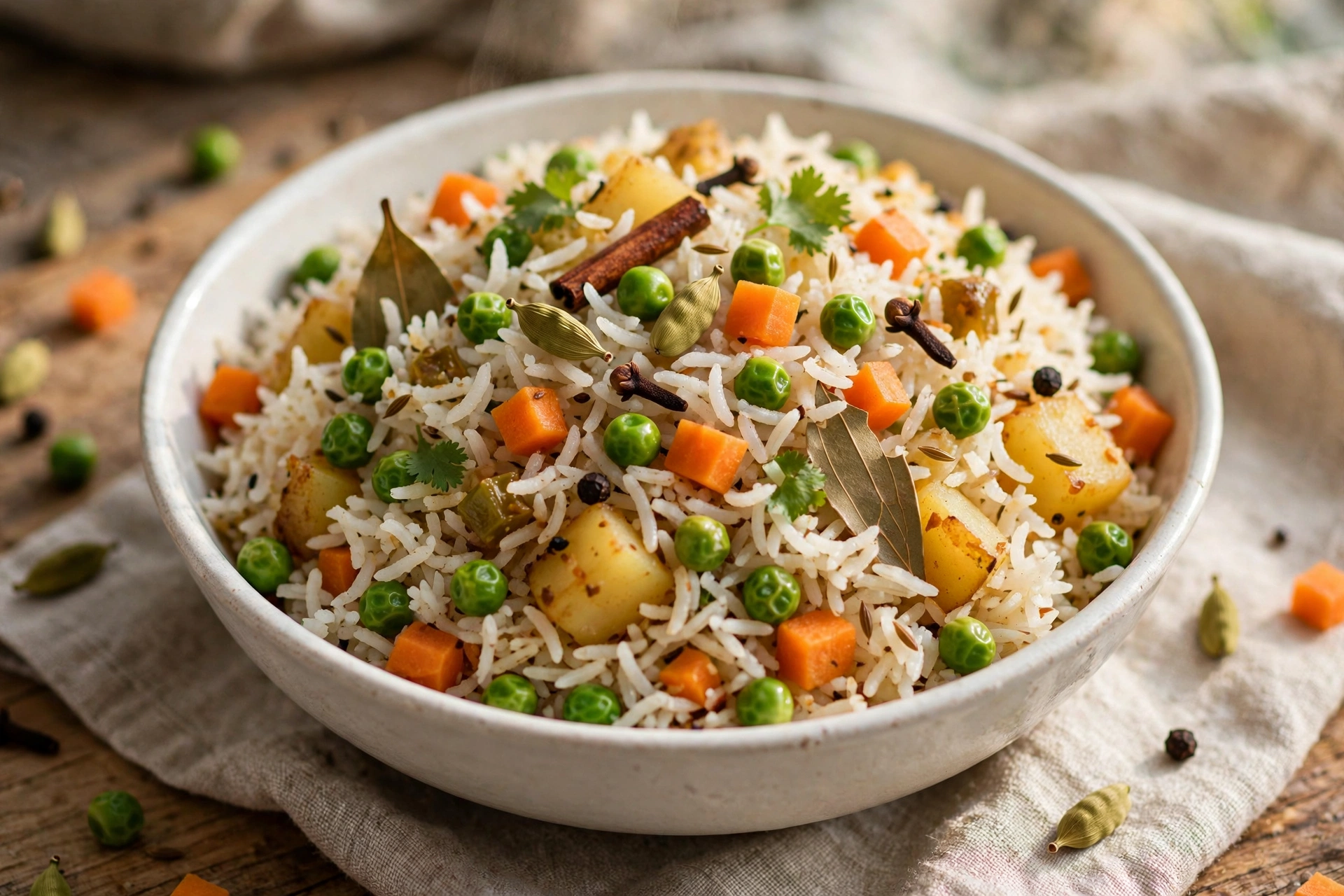
There is a special kind of comfort in a pot of good vegetable pulao. The rice turns out fluffy and separate, every grain coated in warm spices, with soft carrots, peas, and potatoes tucked between the grains. If you have been searching for a reliable vegetable pulao recipe, this is the one I have cooked more times than I can count — for weeknight dinners, for guests who showed up unannounced, and for those evenings when I wanted something satisfying without spending hours in the kitchen.
Pulao is often overshadowed by its flashier cousin biryani, but honestly, on a busy day I prefer it. Everything cooks in one pot, the spices are gentle rather than fiery, and it pairs with almost anything — raita, a simple salad, or a bowl of dal on the side. My mother always insisted that the secret to a great vegetable pulao recipe is not a long list of spices but patience: letting the onions turn properly golden and giving the rice its soaking time.
Why You’ll Love This Vegetable Pulao Recipe
- One pot, minimal cleanup — everything from the tempering to the rice cooks in a single heavy pot.
- Ready in about 40 minutes — most of that time is hands-off simmering.
- Naturally vegetarian — and easy to make vegan by swapping ghee for oil.
- Meal-prep friendly — leftovers reheat beautifully and even taste better the next day.
- Kid-approved — mild spices and colorful vegetables make it a hit with children.
Ingredients
- 2 cups (400 g) basmati rice
- 1 large onion, thinly sliced (about 150 g)
- 2 medium carrots, diced (about 150 g)
- 1 cup (150 g) green peas, fresh or frozen
- 2 medium potatoes, cubed (about 250 g)
- 1/2 cup (75 g) green beans, cut into 1-inch pieces
- 3 tablespoons ghee or neutral oil (45 ml)
- 1 teaspoon cumin seeds
- 4 green cardamom pods, lightly crushed
- 4 whole cloves
- 1-inch cinnamon stick
- 2 bay leaves
- 1 teaspoon grated fresh ginger
- 2 green chilies, slit lengthwise
- 1 teaspoon salt, plus more to taste
- 1/2 teaspoon turmeric powder
- 3 and 1/2 cups (830 ml) hot water
- Fresh coriander leaves, for garnish
- 1 tablespoon lemon juice (optional)
Instructions
- Soak the rice. Rinse the basmati rice under cold water until the water runs mostly clear, then soak it in plenty of fresh water for 20 to 30 minutes. Drain well. This step is non-negotiable in my kitchen — soaked rice cooks evenly and the grains stay long and separate instead of breaking.
- Temper the whole spices. Heat the ghee in a heavy-bottomed pot or Dutch oven over medium heat. Add the cumin seeds, cardamom, cloves, cinnamon, and bay leaves. Let them sizzle for about 30 seconds until fragrant — you will smell the cardamom immediately. Don’t let them burn; burnt spices turn bitter.
- Brown the onions. Add the sliced onions and cook, stirring often, for 6 to 8 minutes until they turn a deep golden brown. This is where the flavor of the whole vegetable pulao recipe is built, so don’t rush it. Pale onions give you pale flavor.
- Add aromatics and vegetables. Stir in the ginger and green chilies and cook for a minute. Then add the potatoes, carrots, and green beans. Sprinkle in the salt and turmeric, and sauté for 4 to 5 minutes so the vegetables pick up the spiced ghee and the potatoes get a head start.
- Add rice and water. Gently fold in the drained rice so every grain gets coated in the spiced oil. Pour in the hot water — hot, not cold, so the cooking temperature doesn’t crash. Add the peas, stir once gently, and bring to a boil.
- Simmer covered. Once boiling, reduce the heat to the lowest setting, cover with a tight lid, and cook for 15 minutes. Resist the urge to peek; the steam is doing the work. After 15 minutes, turn off the heat and let the pot rest, still covered, for 10 minutes.
- Fluff and serve. Remove the lid, discard the bay leaves and cinnamon stick if you like, and fluff the rice gently with a fork — never a spoon, which crushes the grains. Sprinkle with coriander, squeeze over the lemon juice if using, and serve hot with raita or plain yogurt.
Pro Tips
- Rice-to-water ratio matters. For soaked basmati, I use 1 cup rice to 1 and 3/4 cups water. Too much water is the number one reason pulao turns mushy.
- Cut vegetables evenly. Uniform pieces cook at the same rate, so you don’t end up with raw carrots and disintegrating potatoes in the same pot.
- Toast the rice. Frying the drained rice in the spiced ghee for a minute before adding water gives each grain a nutty flavor and helps it stay separate.
- Rest, don’t rush. The 10-minute rest after cooking lets the moisture redistribute. Skipping it gives you wet patches and dry patches.
- Frozen peas go in late. If using frozen peas, add them with the water rather than sautéing — they need very little cooking.
- Double the batch. This vegetable pulao recipe scales up beautifully; just keep the rice-to-water ratio the same and use a wider pot so the rice cooks in an even layer.
FAQs
Can I make vegetable pulao in a rice cooker?
Yes. Do the tempering and onion-browning in a pan first, then transfer everything to the rice cooker with the rice and water and cook on the regular white-rice setting. The flavor will be very close to the stovetop version.
What’s the difference between pulao and biryani?
In pulao, the rice and everything else cook together in one pot from the start, and the spices are milder. Biryani typically involves layering partially cooked rice with a separately cooked masala, and it uses more intense spices and often fried onions and saffron.
Can I add other vegetables?
Absolutely. Cauliflower florets, corn kernels, and diced bell peppers all work well. Just keep the total vegetable quantity roughly the same so the rice-to-water ratio stays correct.
How do I store and reheat leftover pulao?
Cool it quickly, refrigerate in an airtight container for up to 3 days, and reheat with a sprinkle of water in a covered pan or microwave. It also freezes well for up to a month.
That’s my everyday vegetable pulao recipe — simple, fragrant, and endlessly adaptable. Once you have the method down, you can swap the vegetables with the seasons and it will never feel repetitive. Serve it with a cool cucumber raita and you’ve got a complete, comforting meal.