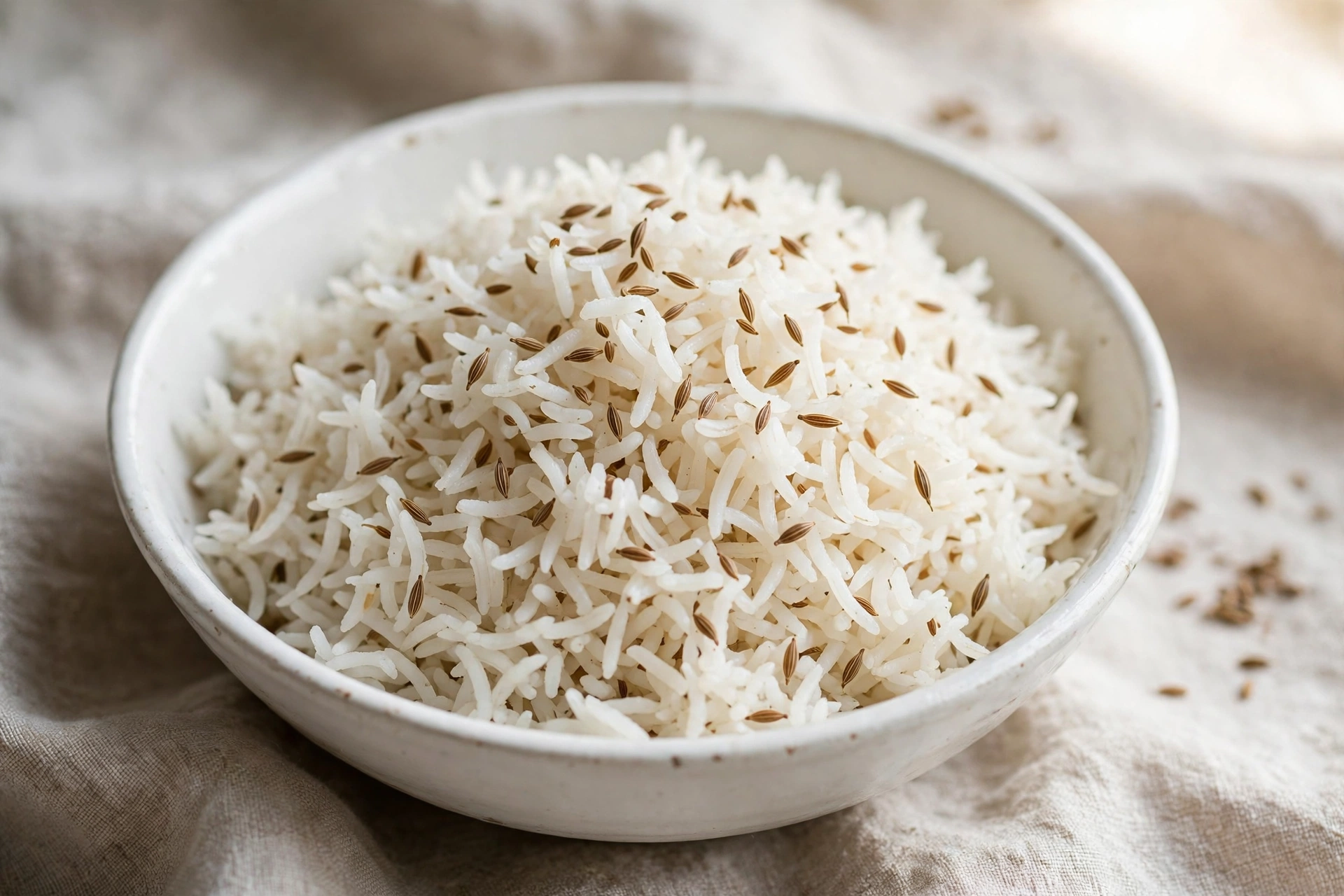
There are some recipes I reach for when the rest of the meal is already complicated, and this zeera rice recipe is the one I trust most. It’s just rice, cumin seeds, and a little fat — but when you get the toasting right, the whole kitchen smells like a wedding hall and the rice tastes like it came from a restaurant. I’ve made this alongside heavy curries, simple dals, and even just with a fried egg on top when I was cooking for myself on a tired evening.
The first time I cooked zeera rice properly, I was maybe nineteen and trying to impress my cousins who had come over for dinner. I had made a chicken curry that I was secretly worried about, and I needed the rice to carry the meal if the curry failed. My mother watched me from the doorway and said only one thing: “Don’t burn the zeera.” I didn’t, and the rice came out perfect — every grain separate, golden with cumin, the seeds nutty and crisp. The curry was fine, but everyone talked about the rice.
What makes a good zeera rice recipe different from plain boiled rice is entirely in the tempering. Whole cumin seeds, fried gently in ghee or oil until they darken a shade and release their aroma, then the rice goes in and gets coated in that flavor before the water even touches it. It’s a small technique, but it changes everything. The rice absorbs the cumin’s earthy warmth from the outside in, instead of just sitting next to it.
This version uses basmati rice, because its long grains and natural fragrance are the right match for cumin. I’ll walk you through the soaking, the exact water ratio that works in my kitchen, and the resting step that most people skip and shouldn’t. By the end, you’ll have a pot of fluffy, separate-grained zeera rice that goes with almost anything.
Why You’ll Love This Zeera Rice Recipe
- Ready in under 30 minutes — including the soaking time, this is one of the fastest impressive sides you can make.
- Only a handful of ingredients — rice, cumin, ghee, salt, and water. Nothing exotic, nothing you need to shop specially for.
- Goes with everything — dal, karahi, kebabs, grilled chicken, or just yogurt and pickle. It never clashes.
- Restaurant taste at home — that golden, aromatic cumin rice from dhaba thalis is exactly what this makes.
- Foolproof once you learn the ratio — I’ll give you the water measurement that works every single time.
- Great for meal prep — it reheats beautifully and even tastes good cold the next day in a lunchbox.
Ingredients
- Basmati rice — 1.5 cups (300 g), rinsed
- Water for soaking — enough to cover the rice by 2 inches
- Ghee — 2 tablespoons (30 ml); or use neutral oil, or half ghee half oil
- Cumin seeds (zeera) — 1.5 teaspoons
- Bay leaf — 1
- Green cardamom pods — 2, lightly crushed (optional but recommended)
- Whole cloves — 3 (optional)
- Salt — 1 teaspoon, or to taste
- Water for cooking — 2.25 cups (540 ml)
- Fresh coriander leaves — 1 tablespoon, chopped, for garnish (optional)
Instructions
- Rinse and soak the rice. Put the basmati rice in a large bowl and rinse it under cold running water, swishing with your hand, until the water runs mostly clear — usually three or four rinses. This removes the surface starch that makes rice gummy. Then cover the rice with fresh cold water by about two inches and let it soak for 20 to 30 minutes. Soaking is the step that gives you long, separate grains instead of broken, mushy ones, because the grains hydrate evenly before they hit the heat. Don’t skip it, and don’t soak longer than 40 minutes or the grains get fragile.
- Drain well. Pour the rice into a fine-mesh strainer and let it drain for at least 5 minutes. You want the grains damp but not dripping — excess surface water throws off your cooking ratio. While it drains, measure out your 2.25 cups of cooking water and keep it nearby, because once the tempering starts, things move fast.
- Heat the ghee and toast the spices. Set a heavy-bottomed pot or deep pan over medium heat and add the ghee. When it’s hot and shimmering, add the cumin seeds, bay leaf, cardamom, and cloves. Stir for 30 to 45 seconds until the cumin seeds darken one shade — from amber to a deeper brown — and smell intensely nutty and warm. This is the moment my mother warned me about: if the seeds turn black, they’re burnt and bitter, and you should start over. It only takes a few seconds too long, so don’t walk away. The aroma when it’s right is unmistakable — earthy, toasty, almost sweet.
- Coat the rice in the tempering. Add the drained rice to the pot and stir gently with a wooden spoon or spatula for about 2 minutes, so every grain gets coated in the spiced ghee. You’ll hear a light crackling and the grains will turn slightly translucent at the edges. This frying step does two things: it wraps each grain in fat so they stay separate, and it toasts the rice itself, adding a subtle nuttiness that plain boiled rice never has. Be gentle — soaked basmati breaks easily if you stir roughly.
- Add water and salt, then boil. Pour in the 2.25 cups of water and add the salt. Stir once, gently, just to distribute the salt. Turn the heat up to high and bring it to a rolling boil. You’ll see the water bubble vigorously around the rice. Let it boil uncovered for about 2 minutes — this initial blast of heat sets the grains so they cook evenly.
- Cover and steam on low. Once it’s boiling hard, reduce the heat to the lowest setting, cover the pot with a tight-fitting lid, and leave it completely alone for 12 minutes. Don’t lift the lid, don’t stir, don’t peek — the steam trapped inside is doing the cooking. If your lid doesn’t fit tightly, you can place a clean kitchen towel between the pot and the lid to seal it (tuck the towel’s edges up so they don’t touch the flame). After 12 minutes, turn off the heat but keep the lid on for another 10 minutes. This resting period is where the magic finishes: the grains firm up, the last of the moisture distributes evenly, and you get that perfect fluffy texture.
- Fluff and serve. Remove the lid, take out the bay leaf and cardamom pods if you spot them easily, and fluff the rice gently with a fork — never a spoon, which mashes the grains. You’ll see long, separate grains, lightly golden, with the toasted cumin seeds scattered through. Taste for salt and adjust if needed. Garnish with chopped coriander if you like, and serve hot.
Pro Tips
- Buy good basmati and store it right. Aged basmati gives longer grains and better aroma. Keep it in an airtight container away from moisture.
- Watch the cumin like a hawk. Cumin goes from perfectly toasted to burnt in under ten seconds. The moment the seeds darken and smell strong, move to the next step immediately.
- The 1:1.5 ratio is your anchor. For soaked basmati, 1.5 cups water per 1 cup rice is the sweet spot in most kitchens. Start here and adjust only if your rice or stove demands it.
- Don’t stir during steaming. Every time you lift the lid, steam escapes and the top layer undercooks. Trust the timer.
- Ghee matters. You can use oil, but ghee gives zeera rice its characteristic richness and aroma. Even one tablespoon of ghee mixed with oil makes a noticeable difference.
- Double the batch for guests. This recipe scales perfectly — just keep the ratios identical and use a wider pot so the rice cooks in an even layer.
- Leftover trick: Day-old zeera rice makes an excellent quick fried rice. Toss it in a hot pan with a beaten egg, some chopped spring onions, and a splash of soy sauce.
Serving Suggestions
Zeera rice is the ultimate team player. Serve it with dal tadka or dal makhani for a classic comforting meal, alongside chicken karahi or any tomato-based curry, or with kebabs and a fresh kachumber salad for something lighter. It’s also wonderful with just a bowl of plain yogurt, some mango pickle, and sliced onions — a simple dinner I make for myself more often than I’d admit. For guests, serve it in a wide bowl with the coriander garnish and let people help themselves; it looks beautiful with the golden cumin seeds visible against the white grains.
FAQs
Can I make zeera rice without soaking the rice?
You can, but the texture won’t be as good. Unsoaked basmati needs slightly more water (about 1.75 cups per cup of rice) and a couple of extra minutes of steaming, and the grains are more likely to break or cook unevenly. If you’re truly in a hurry, rinse very well and add 2 extra minutes to the covered cooking time — but soaking is worth the 20 minutes whenever you can manage it.
Why did my cumin seeds turn bitter?
They were over-toasted. Cumin burns fast, especially in very hot ghee. Use medium heat, not high, and add the rice within 30 to 45 seconds of the seeds hitting the fat. If your seeds are dark brown or black instead of amber-brown, they’ve gone too far — it’s better to wipe out the pot and start the tempering again than to serve bitter rice.
Can I cook zeera rice in a rice cooker?
Yes. Do the tempering and rice-coating steps in a small pan on the stove, then transfer everything to the rice cooker, add the water and salt, and cook on the regular white-rice setting. It works well, though I find the stovetop method gives slightly better separate grains.
How do I store and reheat leftover zeera rice?
Cool it to room temperature within an hour, then refrigerate in an airtight container for up to 3 days. To reheat, sprinkle a tablespoon of water over the rice, cover, and microwave for 2 minutes, or warm it in a covered pan over low heat. The cumin flavor actually deepens overnight.
Is zeera rice gluten-free?
Yes — rice, cumin, ghee, and the whole spices in this recipe are all naturally gluten-free. Just check that your spice brands don’t have anti-caking additives containing gluten, which is rare but worth a glance if you’re cooking for someone with celiac disease.
That’s the whole method — simple ingredients, one careful minute of toasting, and patience with the lid on. Once you’ve made this zeera rice recipe a couple of times, you’ll stop measuring and start cooking by feel, and it’ll become one of those dishes you can make with half your attention on a conversation. That’s when you know a recipe is truly yours.