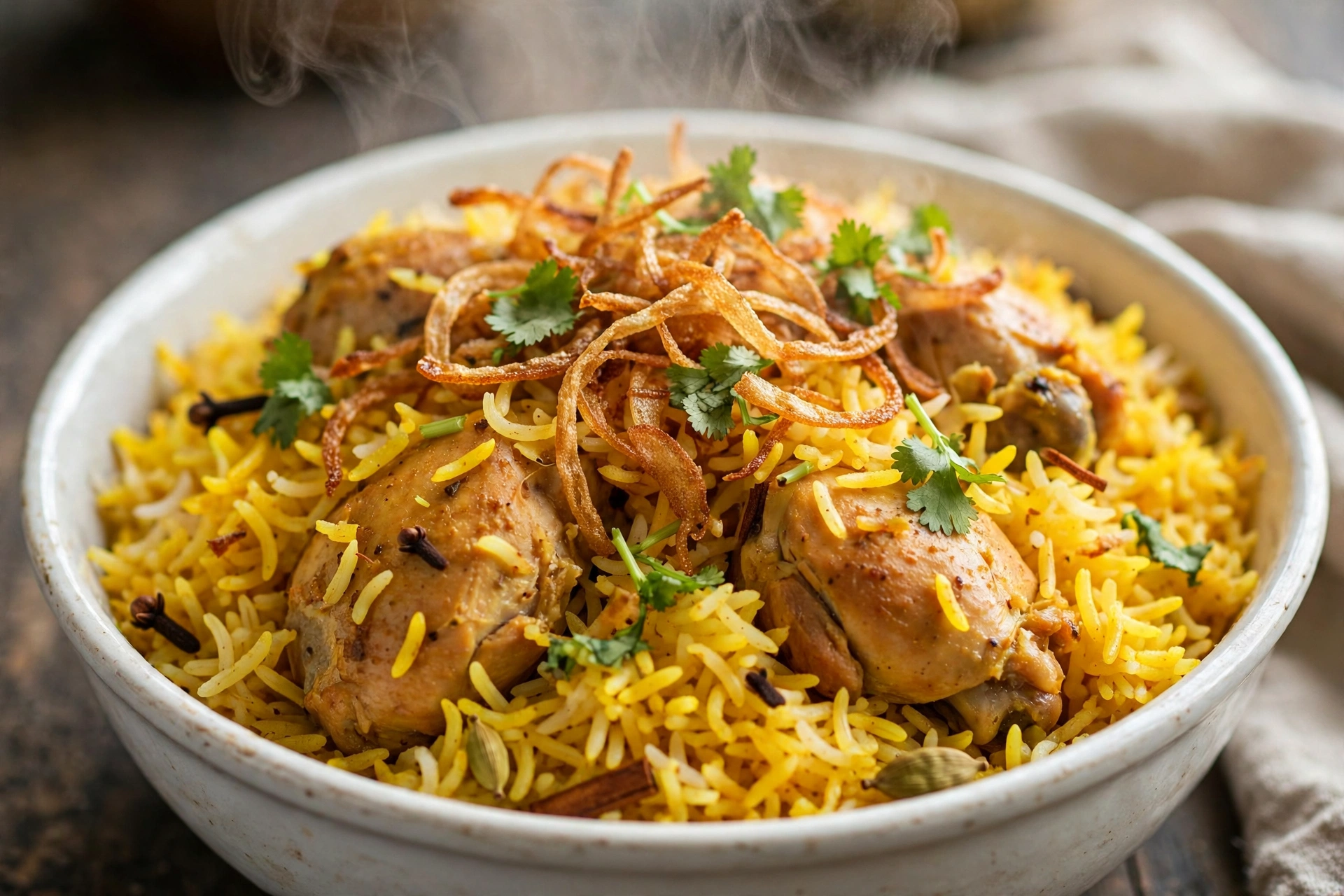
If you have ever wondered why restaurant biryani tastes so much better than the one you make at home, this chicken biryani recipe is going to change that for good. I have cooked this exact Pakistani-style chicken biryani at least twenty times now — for Sunday family lunches, for Eid dawats, for guests who showed up completely unannounced — and every single time, the degchi comes back to the kitchen scraped clean.
The secret is not some rare spice or a shortcut masala packet. It is the layering, the timing, and a handful of small rules my mother drilled into me: parboil the rice to exactly seventy percent, never skip the fried onions, and rest the biryani on dum a full twenty minutes before lifting the lid.
Below is the full method with exact measurements in cups and grams, so even a first-timer can serve it with confidence.
Why You Will Love This Chicken Biryani Recipe
- Proper restaurant-style layers of fragrant basmati and juicy masala chicken
- Clear, foolproof steps with exact timings — no guesswork on the rice
- Made with everyday pantry spices you already have at home
- Feeds six people generously, perfect for family dinners and dawats
- Leftovers taste even better the next day, if there are any
Ingredients
For the chicken marinade:
- 1 kg (2.2 lbs) chicken, bone-in pieces, skin removed
- 1 cup (240 g) plain whole-milk yogurt, whisked smooth
- 2 tablespoons ginger-garlic paste
- 2 teaspoons red chili powder
- 1 teaspoon turmeric powder
- 2 teaspoons biryani masala (good quality store-bought works fine)
- 1 teaspoon salt, plus more to taste
- Juice of 1 medium lemon
- 2 tablespoons cooking oil
For the rice:
- 3 cups (600 g) long-grain basmati rice, soaked in water for 30 minutes then drained
- 10 cups (2.4 liters) water, for boiling
- 2 bay leaves
- 4 green cardamoms, lightly crushed
- 1 black cardamom
- 1 cinnamon stick, about 2 inches
- 1 teaspoon cumin seeds
- 2 tablespoons salt, for the boiling water
For layering:
- 3 large onions, thinly sliced and deep-fried until deep golden brown
- 1/2 cup fresh mint leaves, roughly chopped
- 1/2 cup fresh coriander leaves, roughly chopped
- 4 to 5 green chilies, slit lengthwise
- 1/2 teaspoon saffron threads soaked in 1/4 cup warm milk (or 1/2 teaspoon yellow food color stirred into warm milk)
- 3 tablespoons ghee, melted
Instructions
- Marinate the chicken first, because flavor starts here. In a large mixing bowl, combine the yogurt, ginger-garlic paste, red chili powder, turmeric, biryani masala, salt, lemon juice, and oil, and stir until you have a smooth, thick marinade. Add the chicken pieces and turn them over and over until every piece is coated. Cover and refrigerate for at least 1 hour; overnight is even better. I have tried rushing this to twenty minutes, and the difference is obvious. The yogurt tenderizes the meat and the spices need real time to sink past the surface.
- Cook the chicken masala until the oil separates. Heat 3 tablespoons of oil in a heavy-bottomed pot or degchi over medium heat. Tip in the marinated chicken along with every bit of the marinade. Cook for 12 to 15 minutes, stirring every couple of minutes, until the chicken is about 80 percent cooked and you can see oil glistening at the edges of the masala. The gravy should be thick and a deep reddish-brown, not watery. Do not cook the chicken fully at this stage — it finishes on dum later, and fully cooking it now is the fastest way to dry, chewy meat.
- Parboil the rice, and treat this step like an exam. Bring the 10 cups of water to a rolling boil with the bay leaves, cardamoms, cinnamon, cumin seeds, and salt. Add the drained, soaked rice and cook for exactly 5 to 6 minutes. The grains should be about 70 percent cooked — still firm with a slightly hard white core when you bite one. Drain immediately into a large colander. My mother always said rice fully cooked at this point means ruined biryani — twenty years on, she has never been wrong.
- Layer it like you mean it. In the same heavy pot, spread half of the chicken masala evenly across the bottom. Spoon half of the parboiled rice over it in an even layer. Scatter half of the fried onions, half of the mint, half of the coriander, and half of the slit green chilies over the rice. Repeat with the remaining chicken, rice, onions, and herbs to build the second layer. Finally, drizzle the saffron milk and the melted ghee evenly over the top so every serving gets some of that golden color and richness.
- Seal it and cook on dum. Cover the pot with a tight-fitting lid. If your lid is even slightly loose, lay a clean damp kitchen towel over the pot before putting the lid on, or seal the rim with kneaded atta dough the way old dhaba cooks still do — the whole point is that no steam escapes. Place the pot on high heat for 5 minutes to build up a head of steam, then turn the flame down to the absolute lowest setting and cook for 20 minutes. Do not lift the lid during this time, no matter how incredible your kitchen starts to smell. That trapped steam is doing all the work.
- Rest, then serve with a gentle hand. Turn off the heat and leave the pot covered for 10 minutes. This resting time lets the steam settle back into the rice and the flavors meld together. Now open the lid and, using a wide flat spoon, gently lift and turn the biryani from the sides so the layers stay mostly intact — you want each plate to show both snowy white rice and masala-coated grains. Serve hot with cool mint raita and a simple kachumber salad of onion, tomato, and cucumber.
Pro Tips
- Buy aged, extra-long-grain basmati rice. Freshly harvested rice breaks easily and turns sticky no matter how carefully you cook it. The grains should look long and slender even before cooking.
- Fry your own onions instead of using packaged ones. Slice evenly so they brown at the same rate, and pull them just as they turn golden — they keep darkening in the hot oil.
- No saffron in the cupboard? A pinch of yellow or orange food color stirred into warm milk gives you the classic biryani look for almost nothing. The taste difference is negligible once everything is layered.
- If your stove’s lowest flame still runs hot, slide a flat tawa (griddle) under the pot during dum. It diffuses the heat and stops the bottom layer from scorching, which is the most common dum disaster.
- Scaling up for a dawat? Use a wider pot rather than a taller one. Steam needs to circulate, and a tall narrow pot leaves the top layers undercooked while the bottom burns.
- Leftover biryani reheats beautifully. Sprinkle a tablespoon of water over it, cover tightly, and warm on low heat for about 10 minutes instead of microwaving it dry.
FAQs
Can I use boneless chicken in this chicken biryani recipe?
You can, but cut the initial masala cooking time to 8 to 10 minutes since boneless pieces cook faster and dry out easily. Bone-in stays juicier and adds depth to the masala.
Why did my biryani turn out mushy?
In almost every case, the rice was overcooked during parboiling. Remember the bite test: firm white core at 70 percent. Also drain well — pooled water turns to extra steam on dum.
Can I prepare biryani ahead of time?
You can marinate the chicken and fry the onions a full day ahead and keep them refrigerated. But assemble the layers and cook on dum fresh on serving day. Biryani is at its absolute best within a few hours of cooking, even though the leftovers are still excellent.
What do you serve with chicken biryani?
The classic trio is mint raita, kachumber salad, and sometimes a couple of shami kebabs on the side for guests. A glass of salted lassi or even just cold water with lemon rounds out the meal perfectly.
That is my complete Pakistani-style chicken biryani recipe — the same one that has never once embarrassed me at a family gathering. Make it this weekend, and do not be surprised if someone asks you for the recipe before they have even finished their plate.