Mutton Roghan Josh Recipe – Rich, Slow-Cooked Kashmiri-Style Mutton Curry
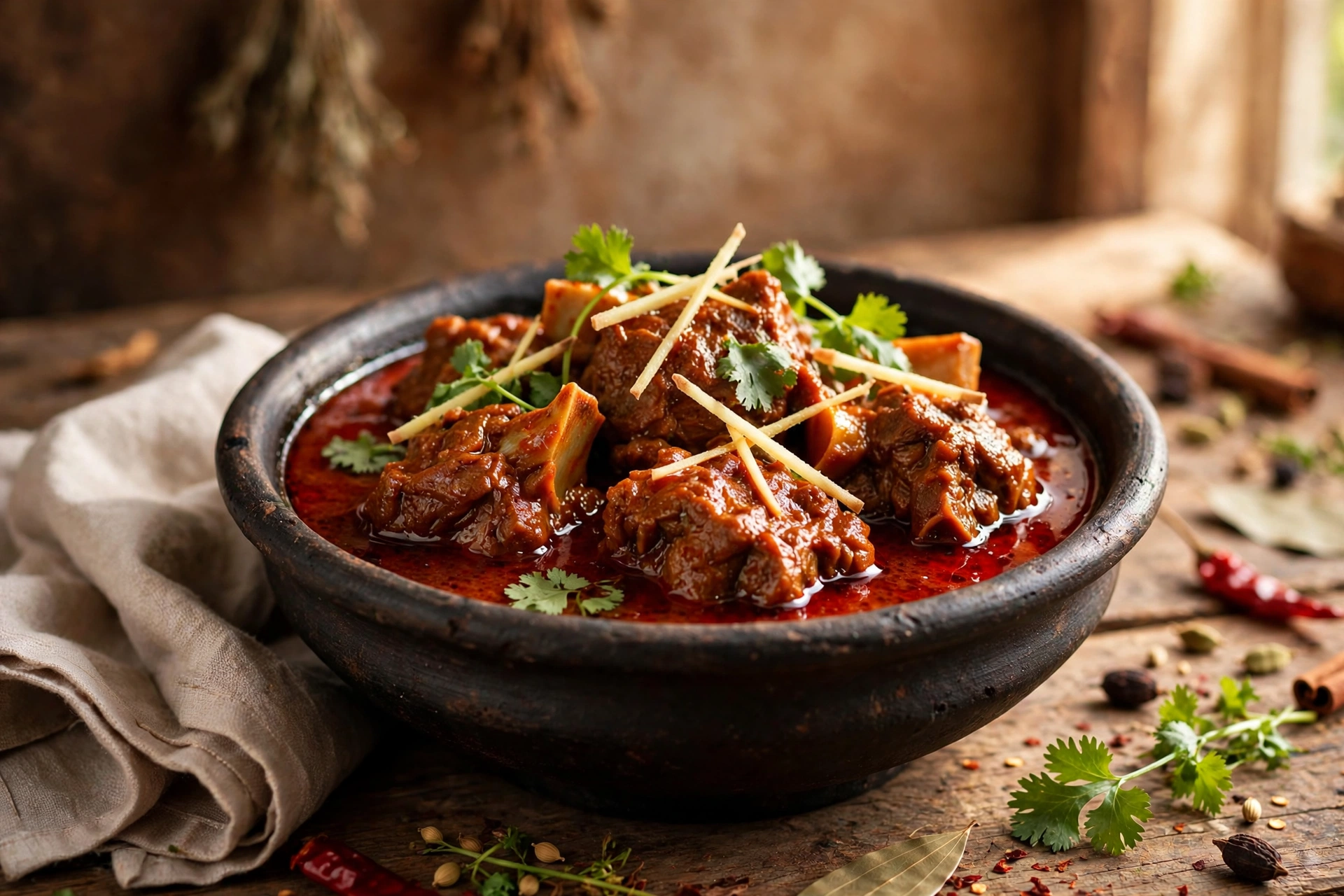
Every desi family has that one curry which turns an ordinary Sunday into something special. In my house, that curry is mutton roghan josh — a slow-cooked Kashmiri-style mutton curry with a deep, glossy red gravy that smells of saunf and hot ghee before you even lift the lid. The meat falls off the bone, and the gravy is rich without being heavy — the kind of salan you mop up with naan and then scrape the handi for more.
Roghan josh is not a quick weeknight curry, and it is not trying to be. It is a weekend dish, a dawat dish. The good news: you do not need a Kashmiri grandmother or a degh-sized flame to make it well. With the right cut of mutton, whole spices, and a little patience, a home kitchen turns out roghan josh better than most restaurant versions. Here is how I make it, step by step.
What Makes Roghan Josh Different From Karahi or Qorma?
If you grew up on mutton karahi and chicken qorma, roghan josh sits in a different corner of the curry world. A karahi is fast, tomato-forward and full of chunky masala; a qorma is mellow and yogurt-thickened. Roghan josh is built on three things: slow-simmered mutton, a spice base of fennel and dry ginger (saunf and sonth), and a signature red colour from ratan jot or Kashmiri red chili rather than mountains of tomatoes. The name itself tells the story: roghan means oil or ghee, josh means heat — a fiery red gravy glistening with oil, and that thin red film on top is the mark of a proper roghan josh, not a flaw.
Ingredients (Serves 6)
For the mutton
- 1 kg mutton (bone-in, leg or shoulder cut into 2-inch pieces, washed and drained)
- 3 cups water (750 ml)
- 1 teaspoon salt (for the first boil)
For the gravy
- ½ cup mustard oil or ghee (120 ml) — mustard oil is the traditional choice
- 2 large onions, finely sliced
- 2 tablespoons ginger-garlic paste
- 1 cup plain yogurt, whisked smooth (240 g)
- 2 medium tomatoes, finely chopped
- 2 tablespoons Kashmiri red chili powder (gives colour without too much heat)
- 1 teaspoon turmeric powder
- 1 tablespoon fennel powder (saunf)
- 1 tablespoon dry ginger powder (sonth)
- 1 teaspoon garam masala
- ½ teaspoon ratan jot (alkanet root), optional but authentic for the deep red colour
- Salt to taste (about 1½ teaspoons, plus the 1 teaspoon in the first boil)
- 3 cups hot water for simmering, added as needed
Whole spices
- 4 green cardamoms
- 2 black cardamoms
- 1-inch cinnamon stick
- 4–5 cloves
- 2 bay leaves
- ½ teaspoon black cumin (shah jeera), optional
For finishing
- 1 teaspoon kewra water or a pinch of saffron soaked in 2 tablespoons warm milk
- 2 tablespoons fresh coriander leaves, chopped
- 1-inch piece ginger, julienned
- 2 tablespoons ghee (for the final tarka), optional
How to Make Mutton Roghan Josh (Step by Step)
Step 1 – Boil the mutton till tender
Put the mutton, 3 cups water and 1 teaspoon salt in a heavy pot or pressure cooker. In a cooker, 4–5 whistles (about 20 minutes) until the meat is tender but not falling apart; in a pot, simmer covered for 45–60 minutes. Drain and reserve the stock — do not throw it away; it is liquid flavour for the gravy.
Step 2 – Heat the oil and bloom the whole spices
Heat the mustard oil (or ghee) in a heavy handi over medium-high heat until it just begins to smoke — this tames the mustard oil’s sharpness. Lower the heat to medium, add all the whole spices and fry 30–40 seconds until fragrant and the cardamoms swell slightly.
Step 3 – Brown the onions deep golden
Add the sliced onions and cook, stirring often, for 12–15 minutes until they turn deep golden brown — darker than you would for a karahi. This colour is the backbone of the gravy. Keep the heat medium; high heat burns the edges before the centers cook through.
Step 4 – Add ginger-garlic paste and tomatoes
Add the ginger-garlic paste and fry 2–3 minutes until the raw smell disappears. Add the chopped tomatoes and cook 5–6 minutes until they melt into the onions and the masala turns soft and jammy, splashing in a spoonful of reserved stock if it sticks.
Step 5 – Add the ground spices
Lower the heat. Add the Kashmiri red chili powder, turmeric, fennel and dry ginger powders, and fry 1–2 minutes, stirring constantly — ground spices burn fast. The masala should look glossy and brick-red. If using ratan jot, add it now with 2 tablespoons of hot oil from the handi (strain out the root before returning the oil).
Step 6 – Add the yogurt carefully
Take the handi off the heat for a minute. Add the whisked yogurt one spoon at a time, stirring quickly after each spoonful to prevent curdling. Return to low-medium heat and cook 4–5 minutes until the yogurt is absorbed and oil separates at the edges — that little ring of ghee is exactly what you want to see.
Step 7 – Add the mutton and simmer slow
Add the boiled mutton and salt, and toss the pieces in the masala for 5–6 minutes until every piece is coated. Pour in 3 cups of the reserved hot mutton stock. Bring to a gentle boil, then lower the heat to the barest simmer, cover, and cook for 35–40 minutes, stirring every 10 minutes, until the gravy thickens and the oil rises to the surface.
Step 8 – Finish and rest
Stir in the garam masala, kewra water (or saffron milk) and the optional final tarka of hot ghee. Top with julienned ginger and coriander leaves. Turn off the heat, cover, and rest 15–20 minutes — resting lets the flavours settle and the gravy thicken slightly. Serve hot with naan, tandoori roti or zeera rice.
Pro Tips for the Perfect Roghan Josh
- Use bone-in mutton, always. The bones enrich the stock and keep the meat juicy through the long simmer. Leg or shoulder cuts are ideal.
- Brown the onions properly. Pale onions make a pale, flat gravy. Deep golden onions give the gravy its body, sweetness and colour.
- Room-temperature yogurt only. Cold yogurt straight from the fridge is the number one cause of curdled gravy. Whisk it smooth and keep it out for 30 minutes before use.
- Do not skip the saunf and sonth. Fennel and dry ginger are the soul of roghan josh. Without them, you have just another red mutton curry.
- Simmer, never boil hard. A rolling boil tightens the meat fibres and makes mutton chewy. A lazy bubble for 35–40 minutes gives you melt-in-the-mouth pieces.
Easy Variations
1. Pressure-cooker weeknight version
After adding the stock (Step 7), pressure-cook for 2 whistles (about 12 minutes) instead of simmering 40 minutes. Open, simmer 10 minutes to reduce the gravy, then finish as usual. Same flavour, half the time.
2. Ratan jot vs no ratan jot
Ratan jot is hard to find outside specialty stores. If you skip it, increase the Kashmiri red chili powder to 2½ tablespoons — the colour will be a touch lighter but the taste is identical.
3. Chicken roghan josh
Swap the mutton for 1 kg bone-in chicken. Boil it only 10–12 minutes (Step 1) and simmer in the gravy for 20–25 minutes instead of 40. A lighter, faster version that kids usually love.
4. Less spicy, family version
Use 1 tablespoon Kashmiri red chili powder instead of 2 and stir in 3 tablespoons of fresh cream with the kewra water. Rich and gentle.
FAQs
Can I make roghan josh without mustard oil?
Yes — ghee or neutral oil works fine. Mustard oil gives a traditional pungent depth, but if your family does not cook with it, use ghee.
How long does roghan josh keep?
Three days in the fridge, and it tastes even better the next day. It freezes beautifully for up to 2 months — thaw overnight in the fridge and reheat gently, adding a splash of hot water if the gravy is too thick.
What should I serve with mutton roghan josh?
Hot naan, tandoori roti, or zeera rice. A simple kachumber salad and raita on the side balance the richness — and at dawats it pairs well with a mild pulao so the curry stays the star.
Final Thoughts
Mutton roghan josh is proof that desi cooking rewards patience more than shortcuts. Brown the onions slowly, respect the saunf and sonth, and let the pot do its quiet work for forty minutes — you will pull the lid off a curry that silences the dinner table for a full minute, the good kind of silence. Make extra on a Sunday, and enjoy the leftovers the next day when the flavours have married even more deeply. Khushboo bhi, lazzat bhi.