Vegetable Daliya Recipe – Desi Broken Wheat Porridge for Weight Loss
There is a quiet hero in every desi kitchen’s pantry — a bag of daliya, broken wheat, sitting next to the atta and the rice. Ask any Pakistani or Indian home where someone is eating light and you will find it: a humble bowl of vegetable daliya that shows up at dinner tables when the family wants something halka-phulka — light but genuinely filling. A well-made daliya, soft and steamy with sweet carrots, popping peas, and a gentle tadka, is pure comfort.
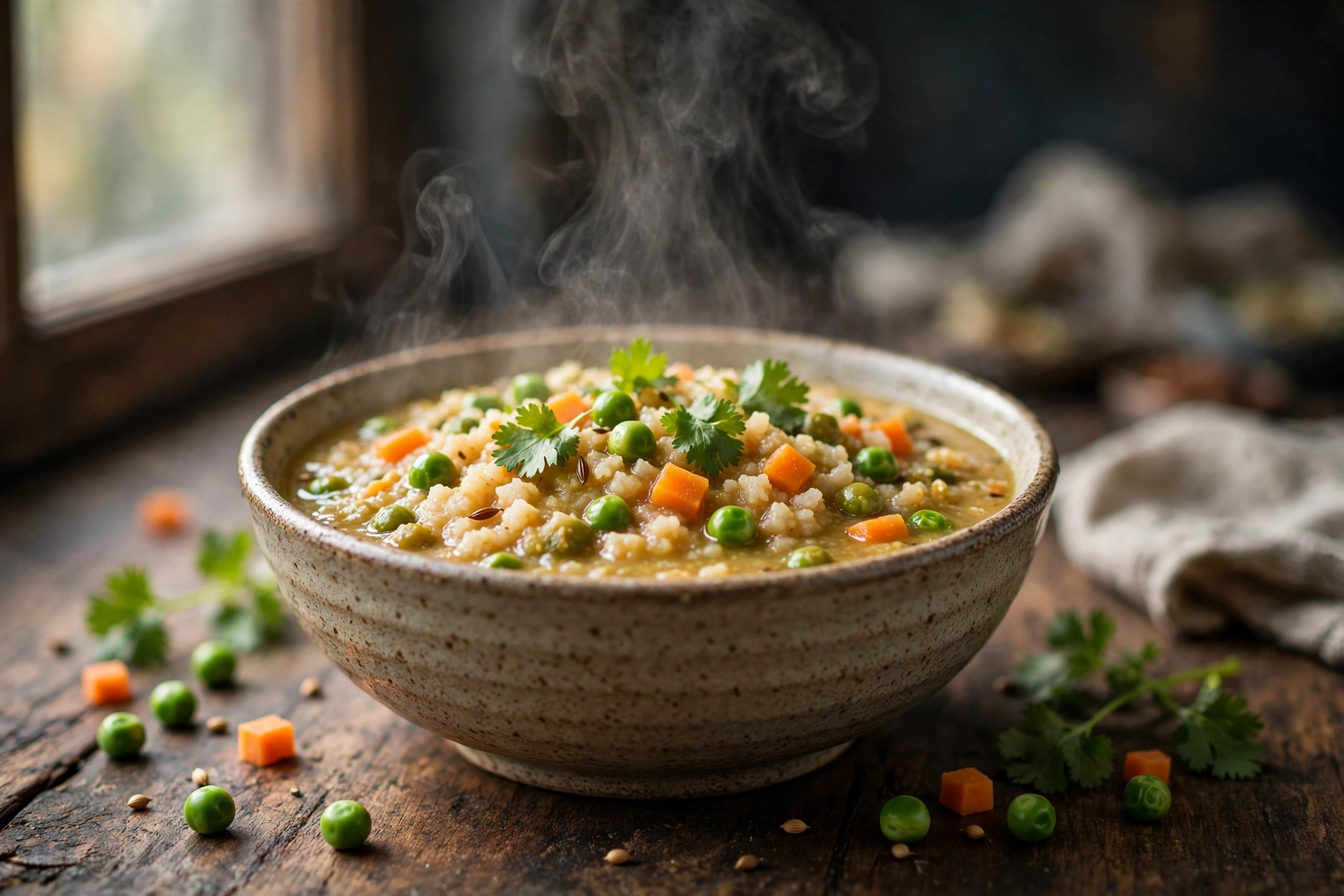
This recipe makes a savory vegetable daliya: broken wheat simmered with onion, carrot, peas, and tomato in lightly spiced water until it turns into a soft, spoonable porridge. One pot, about 30 minutes, and a bowl that keeps you full for hours without that heavy, overeaten feeling.
Why Vegetable Daliya Fits a Light, Healthy Routine
Let us be honest first: no single food melts fat or fixes your health overnight. What daliya genuinely offers is simple and real — broken wheat is a whole grain, so it carries far more fiber than white rice, and fiber is what keeps you feeling full. A bowl of vegetable daliya with real sabzi in it gives you a proper dinner’s worth of satisfaction in roughly 230 calories a serving, with the kind of slow, steady energy that whole grains are known for.
The other honest advantage is control. When you cook daliya at home, you decide the oil (one tablespoon for the whole pot), the salt, and the vegetables. People who are watching their weight often struggle most at dinner — this solves the “what do I eat at night?” problem with something warm, desi-tasting, and easy to digest. If you have a health condition or are on a structured diet plan, talk to your doctor or dietitian about how daliya fits your meals — this is home cooking, not medical advice.
Ingredients
For the Daliya Base
- 1 cup (170g) broken wheat (daliya or lapsi), medium grind
- 1 tablespoon ghee or light cooking oil
- 1 teaspoon cumin seeds (zeera)
- 1 bay leaf (tez patta)
- 1-inch cinnamon stick (dalchini), optional
- 3½ cups water, plus more as needed
- ¾ teaspoon salt, adjust to taste
- ½ teaspoon turmeric powder (haldi)
For the Vegetables and Finishing
- 1 medium onion, finely chopped (about 120g)
- 1 medium carrot, peeled and diced (about 100g)
- ½ cup green peas, fresh or frozen
- 1 small capsicum (shimla mirch), diced — optional but nice
- 1 medium tomato, chopped (about 120g)
- 2 garlic cloves, minced
- 1-inch fresh ginger, grated
- 1–2 green chilies, slit lengthwise
- ½ teaspoon red chili powder (optional, for a little heat)
- ½ teaspoon garam masala
- 2 tablespoons fresh coriander, chopped
- 1 teaspoon fresh lemon juice
Instructions
Step 1: Dry-Roast the Daliya
Place a heavy-bottomed pot or pressure cooker over medium heat and add the broken wheat — no oil yet. Dry-roast for 4–5 minutes, stirring constantly, until it smells nutty and a few grains turn golden. This keeps the grains separate instead of gummy later. Transfer to a plate and set aside.
Step 2: Temper the Spices
In the same pot, heat the ghee or oil over medium heat. When it shimmers, add the cumin seeds, bay leaf, and cinnamon stick. Let the cumin crackle and darken a shade — about 30 seconds. That crackling sound is your signal that the oil is properly flavored and ready for the aromatics.
Step 3: Soften the Onion, Garlic, and Ginger
Add the chopped onion and cook for 4–5 minutes, stirring often, until it turns soft and translucent with lightly golden edges. Stir in the minced garlic, grated ginger, and slit green chilies; fry for one more minute until the raw smell disappears and the kitchen smells properly desi.
Step 4: Add the Vegetables and Tomato
Add the diced carrot, peas, capsicum, and chopped tomato. Sprinkle in the turmeric, salt, and red chili powder if using. Cook for 4–5 minutes, stirring, until the tomato breaks down and the vegetables look glossy and half-cooked. They will finish cooking with the daliya, so do not wait for them to go fully soft here.
Step 5: Add Water and the Roasted Daliya
Pour in the 3½ cups of water and bring it to a rolling boil. Stir in the roasted daliya, scraping the bottom so nothing sticks. Broken wheat drinks a lot of water — if you like it thinner, keep another half cup of hot water ready for later.
Step 6: Cook Until Soft and Creamy
Pressure cooker: cook on high for 3–4 whistles (about 12–15 minutes), then let the pressure release naturally for 10 minutes before opening. Open pot: reduce heat to low, cover, and simmer 22–25 minutes, stirring every 6–7 minutes so the bottom does not catch. The daliya is done when the grains are completely soft and the mixture looks like a thick, creamy porridge. If it seems too thick, stir in hot water a quarter cup at a time.
Step 7: Rest, Then Finish
Turn off the heat, remove the bay leaf and cinnamon stick, and let the daliya rest covered for 5 minutes — it thickens slightly as it sits. Stir in the garam masala, fresh coriander, and lemon juice. Taste and adjust the salt. Serve hot in deep bowls, with an extra squeeze of lemon and coriander on top.
Pro Tips for Perfect Daliya Every Time
- Never skip the dry roast. Unroasted daliya turns sticky and gluey; roasted daliya stays pleasantly separate while still going creamy. It takes 5 minutes and changes everything.
- Cut vegetables small and even. Daliya cooks fast, so chunky carrot pieces stay crunchy while the grain is already soft. Small dice means everything finishes together.
- Add only hot water when thinning. If the porridge looks thick, thin it with hot (not cold) water so the temperature does not drop and the grains do not seize.
- Leftovers reheat beautifully. Refrigerated daliya thickens — that is normal. Loosen it with a splash of hot water and warm it on low heat, stirring, and it comes right back.
Variations to Try
Moong Dal Daliya Khichdi
Add ¼ cup rinsed yellow moong dal along with the broken wheat. The dal melts into the porridge and adds gentle protein — this is the version many Pakistani homes make for kids and elders, and it is even easier on the stomach.
Sweet Milk Daliya (Meetha Daliya)
Skip the vegetables and savory spices entirely. Simmer the roasted daliya in 3 cups of milk with 3–4 tablespoons of sugar or jaggery and a pinch of cardamom. A classic winter breakfast across Punjab.
Palak Daliya
Stir in 2 cups of chopped fresh spinach with the vegetables in Step 4. The spinach wilts down completely and turns the porridge a beautiful green — more iron, more fiber, same mild flavor kids accept easily.
Masala Oats-Style Daliya
Swap the garam masala for 1 teaspoon of pav bhaji masala or kitchen king masala in the finishing step. It gives the same daliya a completely different, street-style personality — great when the family is bored of the regular version.
FAQs
Is daliya good for weight loss?
Daliya can be a sensible part of a weight-conscious diet because it is high in fiber, low in fat when cooked with little oil, and genuinely filling — which helps you avoid late-night snacking. But no food causes weight loss on its own; it is your overall eating pattern, portions, and activity that matter.
Which daliya is best — fine, medium, or coarse?
For savory vegetable daliya, medium grind is ideal: it cooks in about 25 minutes and gives a pleasant, slightly chewy porridge. Fine daliya turns mushy fast (better for baby food), and coarse daliya needs longer cooking and more water.
Can I make daliya without a pressure cooker?
Absolutely — the open-pot method in Step 6 works just as well. It takes about 10 minutes longer and needs an occasional stir, but the texture is actually a little creamier because you can control the water as you go.
How many calories are in a bowl of vegetable daliya?
A generous serving (about 1½ cups cooked) comes to roughly 220–250 calories, with around 7–8g of fiber and 7g of protein, depending on your exact vegetables and oil. Honest home-cooking estimates, not lab figures.
Final Thoughts
Vegetable daliya will never win a beauty contest against biryani, and that is exactly its charm. It is the quiet, dependable dinner — the one you make on a tired Tuesday when you want something warm, desi, and light, and you want it on the table in half an hour. Roast the grain, be generous with the vegetables, finish with lemon, and you have a bowl that tastes like home cooking at its most honest.
If this becomes a regular in your kitchen, try the green smoothie at breakfast or the oats chilla on busy mornings — small, consistent swaps like these are what actually make a healthy routine stick.