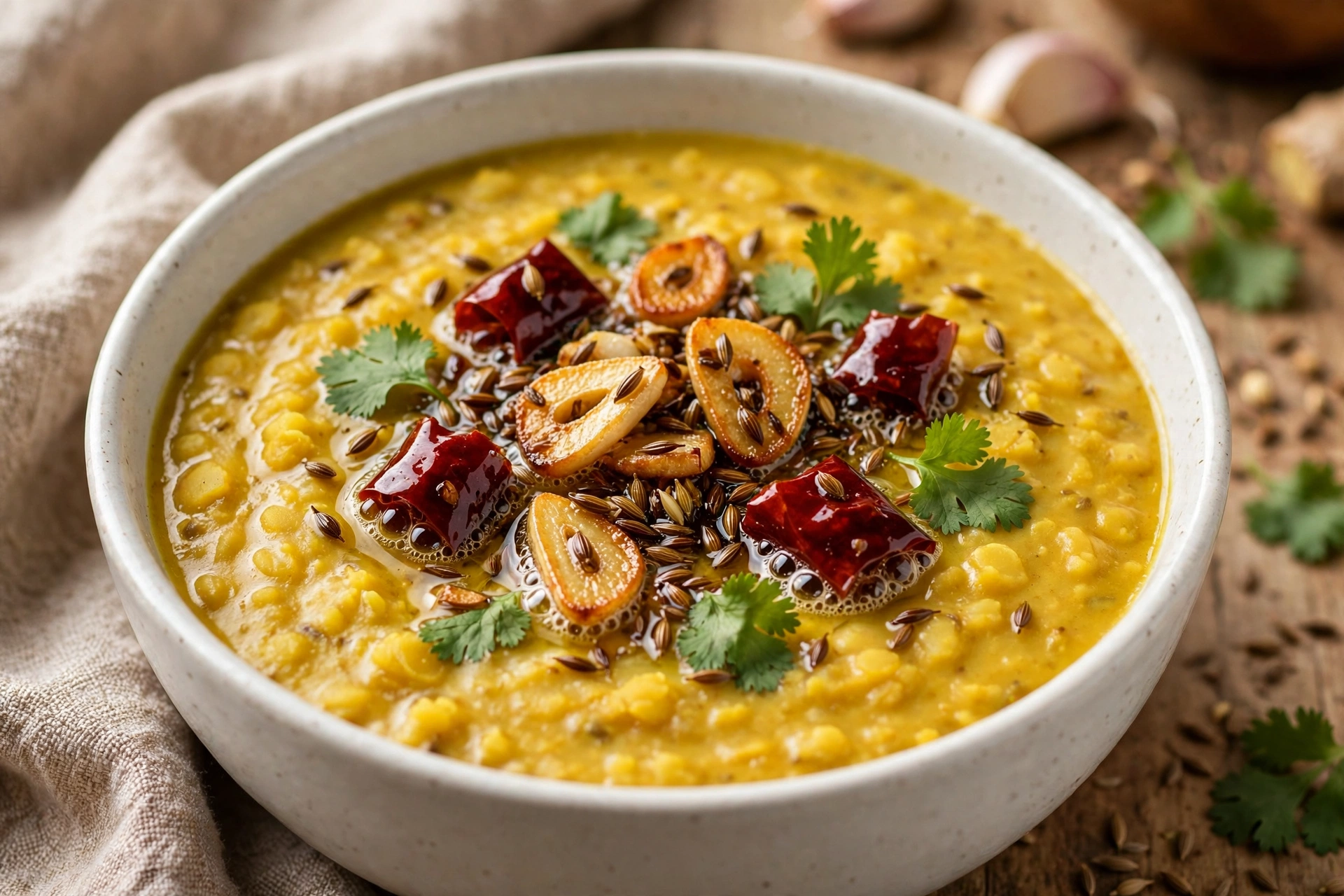
Every Pakistani and Indian home cook has a dal they make on autopilot, and in my house, this dal tadka recipe is that dal. It is the one I cook when the fridge is nearly empty, when I am too tired for anything complicated, and when I want something that tastes like comfort in a bowl. Yellow lentils, a handful of spices, and a sizzling tadka of garlic and cumin poured over the top at the very end — that final sizzle is not just theater, it is where half the flavor lives.
What I love about this dal tadka recipe is how forgiving it is. Lentils do not judge. You can make it in a pressure cooker in 15 minutes or in a regular pot in 40, you can keep it simple or dress it up, and it still comes out creamy, warming, and deeply satisfying. If you are new to desi cooking, this is genuinely the best place to start.
Here is my weeknight dal tadka, exactly the way I make it at home.
Why You Will Love This Dal Tadka Recipe
- Creamy, comforting lentil curry ready in 30 minutes with a pressure cooker
- Made from cheap pantry staples — lentils, onion, tomato, basic spices
- Protein-packed and naturally vegetarian (easily made vegan)
- The sizzling garlic-cumin tadka makes it taste like restaurant dal
- Perfect meal-prep food — tastes even better the next day
Ingredients
For the dal:
- 1 cup (200 g) moong dal (split yellow lentils), or half moong dal and half masoor dal (red lentils)
- 3 cups (720 ml) water, plus more as needed
- 1/2 teaspoon turmeric powder
- 1 teaspoon salt, plus more to taste
- 1 medium onion, finely chopped
- 2 medium tomatoes, finely chopped
- 1 teaspoon ginger-garlic paste
- 2 green chilies, slit lengthwise
- 1 teaspoon cumin seeds
- 1/2 teaspoon red chili powder
- 1/2 teaspoon garam masala
- 2 tablespoons oil or ghee
- Fresh coriander leaves, for garnish
For the tadka (tempering):
- 2 tablespoons ghee (use oil for a vegan version)
- 1 teaspoon cumin seeds
- 4 to 5 garlic cloves, thinly sliced
- 2 dried red chilies
- 1/4 teaspoon asafoetida (hing) — optional but wonderful
- 1/2 teaspoon Kashmiri red chili powder, for color
- 8 to 10 fresh curry leaves — optional
Instructions
- Wash and cook the lentils until completely soft. Rinse the dal under running water until the water runs mostly clear — this removes the starchy dust that makes dal gluey. In a pressure cooker, combine the washed dal, 3 cups of water, turmeric, and salt. Cook on high pressure for 3 whistles (about 12 minutes), then let the pressure release naturally. No pressure cooker? Simmer in a heavy pot with 4 cups of water for 35 to 40 minutes, skimming off any foam, until the lentils have completely fallen apart. You are looking for a thick, porridge-like consistency where individual lentils are no longer visible. Whisk vigorously for a minute — this is my mother’s trick for that creamy, unified texture without any blender.
- Build the base masala. While the dal cooks, heat the 2 tablespoons of oil or ghee in a separate deep pan over medium heat. Add the cumin seeds and let them sizzle for 20 seconds until fragrant. Add the chopped onion and cook for 6 to 8 minutes, stirring regularly, until soft and golden at the edges — not just translucent, actually golden, because that caramelization is flavor. Stir in the ginger-garlic paste and slit green chilies and cook for one minute, then add the chopped tomatoes, red chili powder, and garam masala. Cook for 7 to 8 minutes, mashing the tomatoes with your spoon, until the mixture thickens and you see oil separating at the edges.
- Combine and simmer together. Pour the cooked, whisked dal into the masala pan and stir well to combine. This is where you set the final consistency: dal tadka should be thick enough to coat a spoon but still pourable — add hot water a quarter cup at a time if it is too thick. Let it simmer gently on low heat for 8 to 10 minutes so the flavors marry. Taste and adjust the salt now, not earlier, because dal thickens as it sits and salt perception changes. The dal should taste balanced and comforting, with the tomato’s tang softened into the background.
- Make the tadka — the grand finale. In a small tadka pan or the smallest saucepan you own, heat the 2 tablespoons of ghee over medium-high heat until it is shimmering hot but not smoking. Add the cumin seeds, and the second they start crackling, add the sliced garlic, dried red chilies, and curry leaves if using. Stir for 30 to 45 seconds until the garlic turns golden at the edges — not brown, because burnt garlic will ruin the whole pot. Take the pan off the heat, stir in the asafoetida and Kashmiri chili powder (the residual heat blooms them perfectly), and immediately pour the entire sizzling mixture over the dal. You will hear a dramatic hiss. Cover the pot with a lid for 2 minutes to trap all that aroma, then stir the tadka through just before serving.
- Garnish and serve. Shower the dal with fresh chopped coriander and serve it steaming hot. The classic pairing is fluffy basmati rice with a spoon of ghee melting on top, but it is equally wonderful with jeera rice or soft rotis. A wedge of lemon and some sliced raw onion on the side turn it into a complete, honest meal.
Pro Tips
- Mixing two dals — half moong, half masoor — gives you the best of both: moong’s creamy body and masoor’s quick cooking and beautiful color. Single-dal versions work fine, but the mix is my permanent preference.
- Always add hot water, never cold, when thinning dal. Cold water shocks the lentils and can make the texture grainy. Keep a kettle of hot water nearby when you cook dal regularly.
- The tadka must go on at the very last minute before serving. If you pour it on and then let the dal sit for twenty minutes, you lose that fresh, sizzling aroma that makes dal tadka special.
- Watch the garlic in the tadka like a hawk. There is about a 15-second window between perfectly golden and bitter-burnt. When in doubt, pull it off the heat early — residual heat keeps cooking it.
- Dal thickens considerably as it cools. Always make it slightly thinner than you want it to be at the table, especially if there will be a gap between cooking and serving.
- For a richer, dhaba-style version, stir in 2 tablespoons of fresh cream or a knob of butter along with the tadka. For vegan, use oil throughout and skip the cream — it is still delicious.
FAQs
Which dal is best for this dal tadka recipe?
Moong dal (split yellow lentils) is the classic choice — it cooks fast and turns wonderfully creamy. Masoor dal (red lentils) is a great partner or substitute. Toor dal (arhar) also works but takes longer to cook and has a slightly nuttier flavor. Avoid whole dals like sabut masoor for this recipe; they need a different cooking approach.
Can I make dal tadka without a pressure cooker?
Absolutely. Simmer the rinsed dal in a heavy-bottomed pot with 4 cups of water for 35 to 40 minutes until completely soft, then whisk well. It takes longer but the result is identical — arguably even creamier, since the slow simmer breaks the lentils down very thoroughly.
Why is my dal bland even though I added spices?
Three usual suspects: not enough salt (dal needs assertive seasoning), undercooked onion-tomato masala (it must reach the oil-separating stage), or a timid tadka. The final tempering carries a huge share of the flavor, so do not skimp on the ghee, garlic, and cumin there.
How long does dal tadka keep?
Refrigerated in an airtight container, it keeps well for 3 to 4 days and the flavor actually deepens overnight. It also freezes beautifully for up to 2 months. Thaw, reheat with a splash of hot water to loosen it, and make a fresh quick tadka to pour over — it will taste newly made.
That is my weeknight dal tadka recipe — the humble bowl I turn to more often than any other dish I know. Make it once, and I suspect it will become your autopilot dal too.