Every Pakistani home has a shami kebab memory. For me it is my mother’s kitchen on a rainy evening — a tray of freshly fried kebabs, steam rising off the plate, and my father eating them straight from the karahi before they could reach the table. Garam garam, with a squeeze of lemon and a dollop of cold dahi. That plate never made it to dinner fully intact, and honestly, neither will yours.
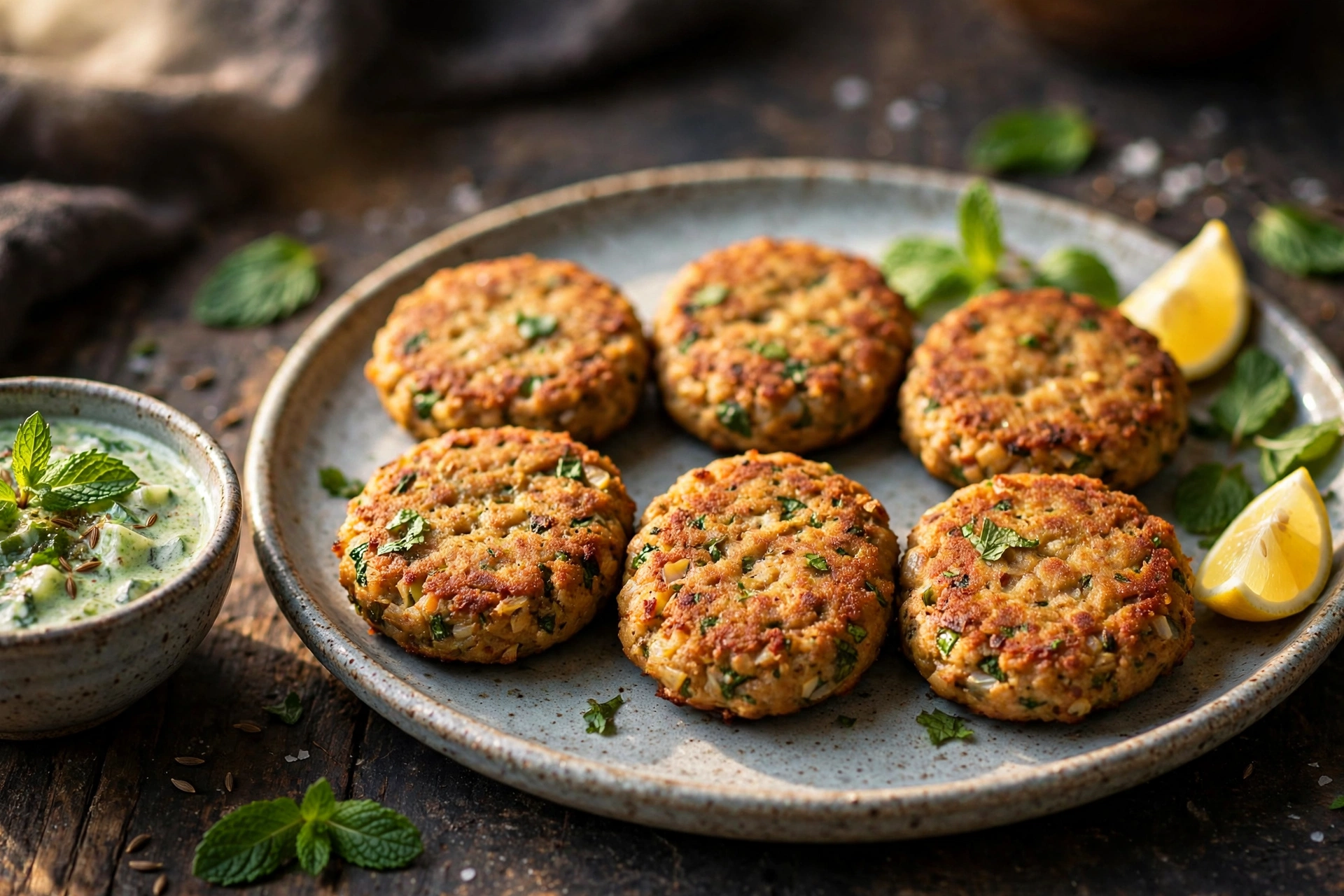
Shami kebab is the quiet hero of desi cooking. It is not as showy as seekh kebab or as rustic as chapli kebab, but it is the one kebab every family keeps in the freezer — for surprise guests, for Ramadan iftar, for school lunchboxes. Keema and chana daal, boiled with whole spices until soft, ground into a smooth paste, shaped into patties, and shallow-fried until golden. Bilkul naram inside, slightly crunchy outside. This is our family’s recipe, with the small details that stop them from breaking apart.
What Makes Shami Kebab Different
If you are new to Pakistani kebabs, here is the family tree. Seekh kebabs are skewered and grilled, chapli kebabs are flat, tomato-studded patties from Peshawar, and shami kebabs are the soft, daal-bound patties that melt in your mouth. The chana daal is not filler — it is the soul of the kebab, giving it that signature soft texture and nutty depth, and stretching half a kilo of keema into twenty kebabs.
The name, some say, comes from “shaam” — evening — because these were the snack served with evening chai. A proper shami kebab should hold together in the pan and be soft enough to eat in a bun without falling apart. The secret, which I will repeat like a broken record, is drying the mixture completely before grinding.
Ingredients (Makes 18–20 Kebabs)
- 500 g beef keema — or mutton or chicken keema; use fine mince, not chunky
- 1 cup chana daal (200 g), soaked 4–5 hours and drained
- 1 medium onion, roughly chopped
- 6–8 garlic cloves
- 1-inch ginger (about 15 g), sliced
- 8–10 dried red chilies (sabut lal mirch)
- 1 tablespoon coriander seeds (sabut dhania)
- 1 teaspoon cumin seeds (sabut zeera)
- 4–5 green cardamoms (elaichi)
- 1 black cardamom (bari elaichi)
- 4–5 cloves (laung)
- 1-inch cinnamon stick (dalchini)
- 1 bay leaf (tez patta)
- 1 tablespoon salt, or to taste
- 2 cups water (500 ml)
- 1 beaten egg, for binding
- ½ cup fresh coriander leaves, finely chopped
- ½ cup fresh mint leaves, finely chopped
- 2–3 green chilies, finely chopped
- Oil or ghee, for shallow frying
For Serving
- Lemon wedges
- Sliced onions and green chilies
- Homemade naan or tandoori roti
Step-by-Step Instructions
Step 1: Soak the Daal
Rinse the chana daal and soak it in plenty of water for 4–5 hours, or overnight. Soaking is not optional — unsoaked daal takes forever to soften and leaves hard bits in your kebabs. Drain well before cooking.
Step 2: Boil Everything Together
In a heavy pot or pressure cooker, combine the keema, drained chana daal, onion, garlic, ginger, dried red chilies, all the whole spices, salt, and 2 cups of water. Pressure-cook 12–15 minutes after the first whistle, or simmer covered for 45–55 minutes in a regular pot, until the daal is completely soft and crushes easily between your fingers.
Step 3: Dry the Mixture Completely
This is the step that decides everything. Remove the lid and cook on medium-high heat, stirring constantly, until every drop of water evaporates. The mixture should look dry and crumbly, leaving the sides of the pot. If you grind a wet mixture, your kebabs will be mushy and will break in the pan — there is no fixing it later. Ten extra minutes of drying beats a tray of broken kebabs.
Step 4: Cool, Then Grind
Let the mixture cool to room temperature — grinding hot keema makes a gummy paste. Pick out the bay leaf, black cardamom shell, and cinnamon stick (the smaller spices can stay). Grind in batches to a smooth, fine paste, like soft dough. If you see whole daal pieces, grind that batch again.
Step 5: Knead and Shape
Transfer the paste to a large bowl. Add the beaten egg, chopped coriander, mint, and green chilies, and knead for 2–3 minutes until the mixture holds together when squeezed. Wet your palms, take a lemon-sized portion, and shape it into a smooth patty about ½-inch thick. Too thin and they dry out, too thick and the center stays raw-tasting. You should get 18–20 kebabs.
Step 6: Shallow Fry Until Golden
Heat a wide pan over medium heat with enough oil to come halfway up the kebabs — about ½ cup. The oil should be hot but not smoking. Fry in batches, 3–4 minutes per side, until deep golden brown with crisp edges. Do not crowd the pan and do not flip too early — let the first side set, then turn once with a flat spatula. Drain on a wire rack or paper towel.
Step 7: Serve Garam Garam
Serve immediately with lemon wedges, sliced onions, and your favorite chutney or raita. They are best in the first fifteen minutes, when the outside is still crisp and the inside steaming soft.
Pro Tips for Perfect Shami Kebabs
Dry, dry, dry. The number one reason shami kebabs break is a wet mixture. After boiling, the pot should look almost fried, with oil glistening and no water at the bottom.
Chill before shaping. If your mixture feels soft, refrigerate it for 30–45 minutes. Cold mixture firms up, shapes cleanly, and fries without cracking.
Test one first. Before frying the whole batch, fry a single kebab. If it cracks, knead in one more tablespoon of beaten egg or a spoon of besan (gram flour) — not more, or the kebabs turn dense.
Medium heat, always. High heat burns the outside before the inside sets; low heat makes them soak up oil. Medium, patient heat gives you that perfect crisp shell.
Variations to Try
Chicken Shami Kebab: Swap the beef for 500 g chicken keema. Chicken releases more water, so boil with only 1½ cups of water and dry the mixture extra carefully. Lighter and kid-friendly.
Mutton Shami Kebab: Use mutton keema for the richest, most traditional version — the dawat-wali recipe. Mutton needs a full 50–60 minutes of simmering to turn tender.
Egg-Coated Shami: Dip each shaped patty in beaten egg before frying for an extra-crisp crust — the dhaba style.
Freezer-Friendly Batch: Shape the patties, freeze solid on a tray, then transfer to a zip-lock bag. They keep 2–3 months. Fry straight from frozen on medium-low heat, adding 2–3 extra minutes per side — no thawing needed.
Daal Swap: Out of chana daal? Masoor daal (red lentils) works in a pinch and cooks faster, though the kebabs will be slightly softer. Skip moong daal — it makes the texture pasty.
How to Serve Shami Kebabs
The classic way is simple: hot kebabs, cold raita, and fresh naan or tandoori roti, with a glass of mango lassi if you are feeling celebratory. For iftar, pair them with zeera rice and masala chai. They also make excellent bun kebabs — split a soft bun, spread imli chutney, add a kebab and onions, and you have Karachi street food at home.
FAQs
Why do my shami kebabs break while frying?
Almost always because the boiled mixture was not dried enough before grinding. The fix is in step 3: cook until the mixture is crumbly-dry. As a rescue, chill the shaped patties for 30 minutes and add a spoon of besan — but prevention beats rescue every time.
Can I make shami kebabs without egg?
Yes. The egg helps binding, but a well-dried, finely ground mixture holds on its own. Skip the egg and knead in 2 tablespoons of besan instead. The texture will be slightly denser but still delicious.
Beef, mutton, or chicken — which is best?
Beef is the everyday favorite — juicy and affordable. Mutton is the most flavorful and the traditional dawat choice. Chicken is the lightest and cooks fastest. All three work with this recipe; only the water and cooking time change slightly.
How long can I store them?
Shaped, uncooked patties keep 2 days in the fridge or 2–3 months in the freezer. Cooked kebabs keep 3 days refrigerated — reheat in a hot pan, not the microwave, to bring back the crispness.
Can I bake or air-fry shami kebabs?
You can. Brush the patties with oil and bake at 200°C (400°F) for 20–25 minutes, flipping once, or air-fry at 190°C for 12–14 minutes. A little less crisp than the shallow-fried version, but still very good — and lighter.
The Final Word
Shami kebab is one of those recipes that looks humble and tastes like home. It asks for a little patience — the soaking, the slow drying, the careful shaping — but it pays you back with a freezer full of golden patties. Make a double batch this weekend and freeze half — your secret is safe with us.