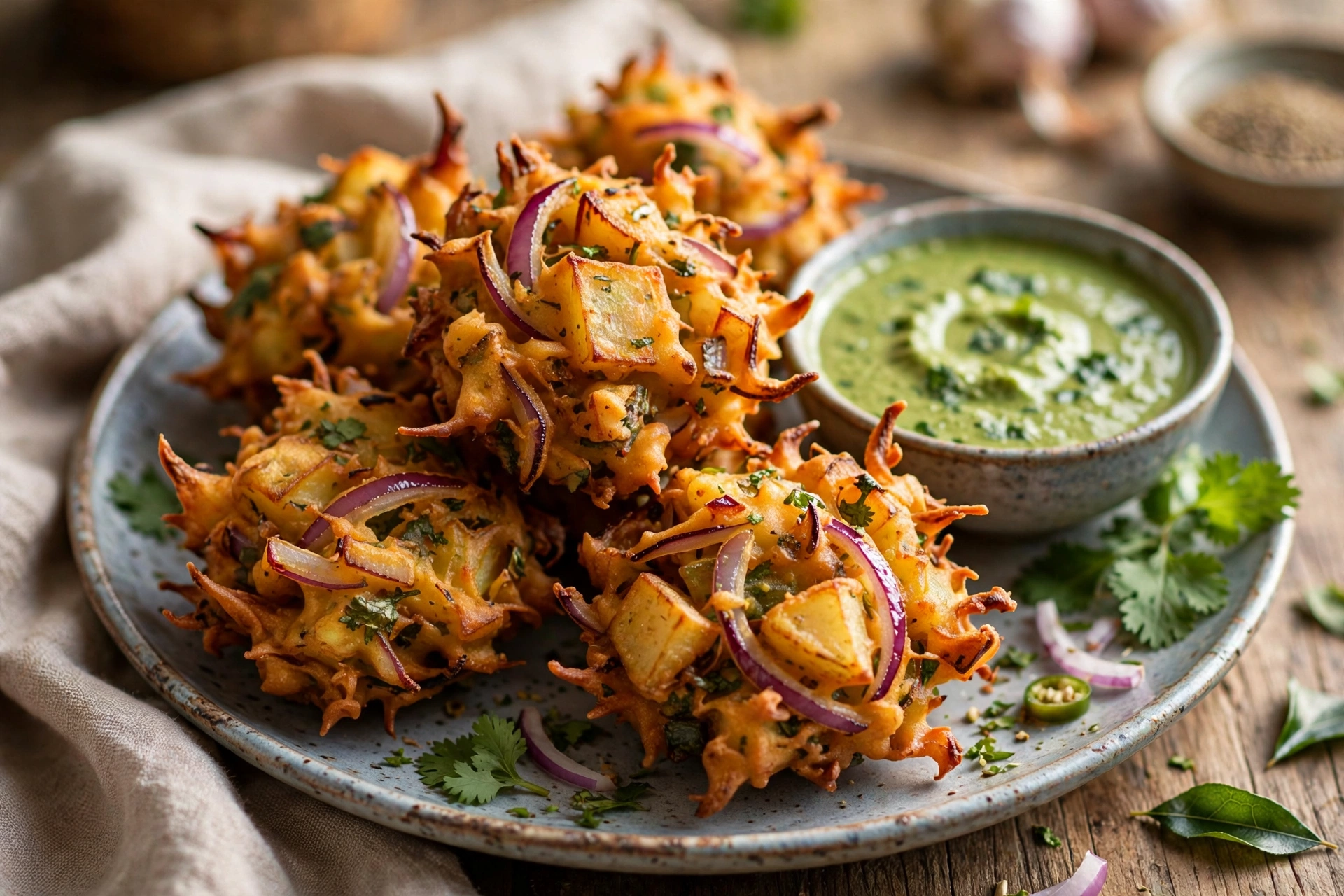
The sound of rain on the windows, a steaming cup of chai, and a plate of crisp, golden pakoras — if that’s not happiness, I don’t know what is. In our house, the first monsoon shower has always meant one thing: someone is in the kitchen whisking besan batter. This pakora recipe gives you shatteringly crisp vegetable fritters with soft, flavorful centers, and once you nail the technique, you’ll make them all rainy season long.
Pakoras look deceptively simple — sliced vegetables in chickpea flour batter, deep fried — but the difference between soggy and crisp comes down to a few small details. My mother always insisted the batter should be thick enough to coat heavily, and the oil must be properly hot before the first pakora goes in. I have tested every shortcut over the years, and I keep coming back to her method because it simply works.
Why You’ll Love This Pakora Recipe
- Incredibly crisp — the rice flour trick keeps them crunchy even as they cool.
- 15-minute batter — no resting, no yeast, no fuss.
- Use any vegetables — potatoes, onions, cauliflower, spinach, eggplant, chilies.
- Perfect chai companion — the ultimate rainy-day snack pairing.
- Naturally vegan and gluten-free — besan does all the work.
Ingredients
- 1 and 1/2 cups (180 g) besan (chickpea flour)
- 3 tablespoons rice flour (25 g) — the crispness secret
- 1 teaspoon salt, plus more to taste
- 1/2 teaspoon turmeric powder
- 1 teaspoon red chili powder (adjust to taste)
- 1 teaspoon ajwain (carom seeds), lightly crushed
- 1/2 teaspoon baking soda
- 3/4 cup (180 ml) water, plus more as needed
- 2 medium potatoes, thinly sliced (about 250 g)
- 2 medium onions, thinly sliced (about 200 g)
- 1 cup (100 g) cauliflower florets, small
- 4-5 green chilies, slit (optional, for the brave)
- 10-12 fresh spinach leaves (optional)
- Oil for deep frying (about 750 ml)
Instructions
- Make the batter. In a large bowl, whisk together the besan, rice flour, salt, turmeric, red chili powder, and ajwain. Add the water gradually, whisking to a thick, smooth batter — it should coat the back of a spoon heavily and fall in slow ribbons. This thickness is critical in any good pakora recipe: thin batter slides off the vegetables and fries up greasy. Stir in the baking soda last, just before frying.
- Heat the oil. Pour oil into a deep kadai to a depth of about 2 inches and heat over medium-high to 175-180°C (350°F). Test with a drop of batter — it should sizzle vigorously and rise to the surface within seconds, turning golden in about a minute. Too cool means greasy pakoras; too hot means raw insides.
- Coat the vegetables. Working in batches, toss a handful of sliced vegetables in the batter until every piece is well coated. For onion pakoras, squeeze the sliced onions with a pinch of salt first and let them sit 5 minutes — they release moisture and need less batter.
- Fry in batches. Drop battered vegetables into the hot oil one piece at a time — don’t dump, or they’ll clump. Fry 8 to 10 pieces per batch without crowding. Cook for 3 to 4 minutes, turning occasionally, until deep golden and crisp all over. The sizzling will quiet down noticeably when they’re done.
- Drain and season. Lift out with a slotted spoon, drain on a wire rack (not paper towels piled high — steam makes the bottom ones soggy), and sprinkle immediately with a tiny pinch of salt and chaat masala if you like. Serve hot with mint chutney, tamarind chutney, or simply ketchup.
Pro Tips
- Rice flour is non-negotiable for crunch. Even two tablespoons makes a dramatic difference. Cornstarch works as a substitute, but rice flour gives the best shattering crust.
- Baking soda goes in last. It starts reacting the moment it hits the wet batter, so add it right before the first batch hits the oil for maximum lift and lightness.
- Slice vegetables thin and even. Thick potato slices stay raw inside while the outside burns. Aim for 2-3 mm slices — a mandoline helps enormously.
- Keep the oil temperature steady. Each batch cools the oil slightly; let it come back up between batches. A thermometer takes the guesswork out.
- Don’t overcrowd the kadai. Crowding drops the temperature and the pakoras steam instead of frying. Patience between batches pays off in crunch.
- Second fry for extra crisp. For party-level crispness, fry once until pale gold, rest 5 minutes, then fry again until deep golden. Restaurant-style crunch, guaranteed.
FAQs
Why are my pakoras soggy instead of crispy?
The usual suspects: batter too thin, oil not hot enough, or overcrowding the pan. Fix the batter thickness first — it should cling heavily to the vegetables — then verify your oil temperature with the batter-drop test.
Can I make pakoras in an air fryer?
You can, though they won’t match deep-fried crispness. Spray the battered vegetables generously with oil and air fry at 200°C (400°F) for 12 to 15 minutes, flipping halfway. They’ll be tasty, just a different texture.
Can I prepare the batter in advance?
The dry ingredients can be mixed ahead, but add water and especially the baking soda just before frying. Pre-mixed wet batter loses its lift and the vegetables weep water into it, thinning it out.
What are the best vegetables for pakoras?
Potatoes and onions are the classics. Cauliflower, eggplant slices, spinach leaves, green chilies, and even bread slices all work wonderfully. Just keep slices thin so they cook through.
What chutney goes best with pakoras?
Mint-coriander chutney is the classic pairing — its fresh sharpness cuts through the richness of the fried batter beautifully. Tamarind chutney adds a sweet-sour contrast that works especially well with onion pakoras. And honestly, on a lazy rainy evening, good old tomato ketchup does the job just fine. I usually put out two chutneys and let everyone mix and match.
That’s my go-to pakora recipe for rainy days, unexpected guests, and chai-time cravings. Master the batter thickness and the oil temperature, and you’ll never buy frozen pakoras again. Now put the kettle on — the chai is the other half of this equation.