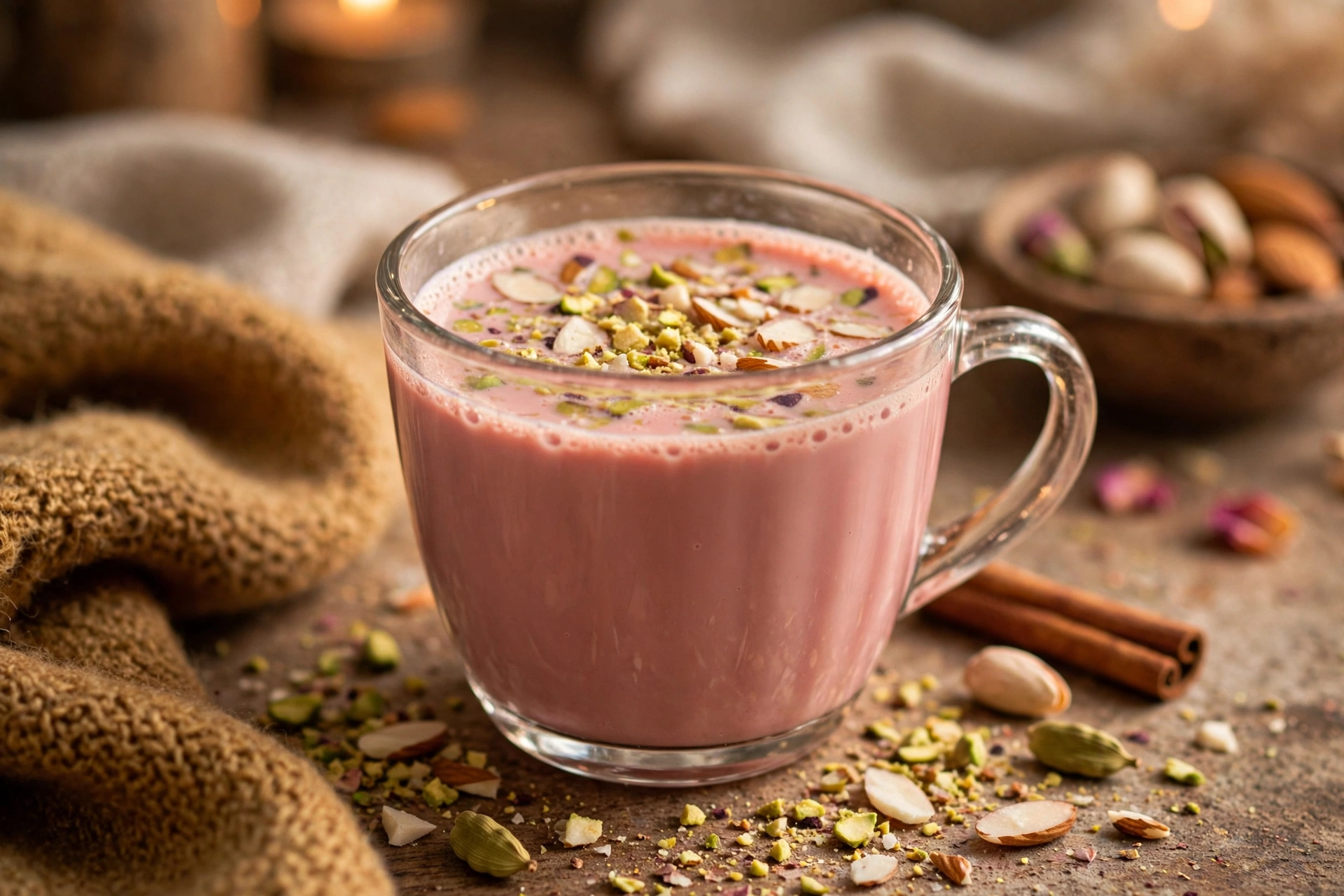
I’ll never forget the first time I saw kashmiri chai turn pink. I was at a friend’s house in winter, and she was making this traditional salt tea the slow way — simmering green tea leaves with baking soda, then shocking it with cold water. The liquid went from murky brown to a gorgeous rose pink right in front of me, like a magic trick. This kashmiri chai recipe will show you exactly how that transformation happens in your own kitchen.
Now, fair warning: authentic kashmiri pink chai is a labor of love. The traditional method takes over an hour of simmering and reducing. But I’ve worked out a version that keeps the essential technique — the baking soda reaction that creates the pink color, the aeration that builds the froth — while fitting into a realistic afternoon. The result is that beautiful pink tea with its distinctive salty-sweet flavor, topped with crushed nuts.
If you’ve only ever had doodh patti or elaichi chai, kashmiri chai is a completely different experience. It’s made with green tea leaves (not black), it contains salt instead of sugar as the base seasoning, and it’s finished with milk and crushed pistachios and almonds. The flavor is subtle, creamy, and warming — perfect for cold evenings.
Why You’ll Love This Kashmiri Chai Recipe
- That stunning pink color — the natural chemical reaction is genuinely fascinating to watch
- Unique salty-sweet flavor — unlike any other chai you’ve tried
- Traditional technique, simplified — all the essential steps without the full hour of simmering
- Perfect winter drink — warming, creamy, and deeply comforting on cold days
- Impressive to serve — guests always ask how you made tea pink
Ingredients
- 4 tablespoons (about 20g) Kashmiri green tea leaves (or any good quality green tea)
- 4 cups (1 liter) water, plus 1 cup (250ml) ice-cold water
- 1/4 teaspoon baking soda (this is what creates the pink color — don’t skip it)
- 1/2 teaspoon salt, plus more to taste
- 3 cups (750ml) full-cream milk, chilled
- 4-5 green cardamom pods, lightly crushed
- 2 tablespoons (25g) sugar (optional — traditional kashmiri chai is salted, not sweet)
- 2 tablespoons crushed pistachios, for garnish
- 2 tablespoons crushed or slivered almonds, for garnish
Instructions
- Start the tea base. In a medium saucepan, bring 4 cups of water to a boil. Add the green tea leaves and the baking soda. Stir well. The baking soda is the key to this entire kashmiri chai recipe — it reacts with the tea’s natural compounds and is what eventually produces the pink color. Reduce the heat to medium and let it simmer.
- Simmer and reduce. Let the tea simmer for 20-25 minutes, stirring occasionally. The liquid will reduce to about half — roughly 2 cups. It will look dark and murky at this stage, which is completely normal. Don’t worry; the pink hasn’t appeared yet.
- Shock with cold water. Remove the pan from the heat. Pour in the cup of ice-cold water all at once. You should see the color begin to shift — from brownish toward a reddish-pink tone. This temperature shock is a traditional step that helps develop the color. Stir vigorously for a minute.
- Aerate the tea. Now comes the fun part. Using a ladle or a small jug, scoop up the tea and pour it back into the pan from a height of about a foot. Repeat this 8-10 times. This aeration does two things: it deepens the pink color and builds a light froth. You’ll notice the tea looking pinker with each pour. Strain the tea through a fine sieve into a clean pot, discarding the leaves.
- Add milk and season. Return the strained pink tea to low heat. Add the crushed cardamom pods and salt. Slowly pour in the chilled milk while stirring. Here’s an important detail: cold milk preserves the pink color better than hot milk. Heat gently until steaming — do not boil, or the color may dull. Taste and adjust the salt. If you prefer a slightly sweet version, add the sugar now and stir until dissolved.
- Serve with nuts. Pour into cups or traditional glasses. Top each serving generously with crushed pistachios and almonds. Serve immediately while hot. The contrast of the pink tea against the green pistachios looks absolutely beautiful.
Pro Tips
- Don’t skip the baking soda. I know it sounds strange in tea, but without it, you simply won’t get the pink color. The small amount used doesn’t affect the taste — it purely drives the color reaction.
- Use cold milk, not hot. Adding chilled milk to the tea base keeps the pink vibrant. Hot milk can turn the color muddy or brownish. This one detail makes a visible difference.
- The longer the simmer, the deeper the color. If your pink is pale, next time simmer the tea base a bit longer before adding the cold water. More reduction means more concentrated color.
- Green tea quality matters. True Kashmiri tea leaves give the best results, but any decent green tea works. Avoid flavored green teas — the added flavors clash with the traditional taste.
- Salt is traditional; sugar is optional. Authentic kashmiri chai is salted. But many families now add a little sugar too. Start with salt, taste, and decide for yourself — there’s no wrong answer.
- Serve in clear glasses. Half the joy of kashmiri chai is looking at it. Clear glasses show off the pink color and the floating nuts beautifully.
FAQs
Why isn’t my kashmiri chai pink?
The most common reasons are skipping the baking soda, not simmering long enough, or using hot milk instead of cold. Make sure you reduce the tea base well, shock it with ice-cold water, aerate thoroughly, and add chilled milk gently.
Is kashmiri chai supposed to be salty?
Yes — traditional kashmiri chai, also called noon chai (noon means salt), is a salt tea. The salt enhances the creamy flavor. That said, many modern versions add a touch of sugar as well. Try it the traditional way first.
Can I make this kashmiri chai recipe with tea bags?
You can, though loose leaves give better color. Use 4-5 green tea bags for the same quantity. The technique — baking soda, reduction, cold shock, aeration — stays exactly the same.
How is kashmiri chai different from regular doodh patti?
Completely different teas. Doodh patti uses black tea, is sweetened with sugar, and is spiced. Kashmiri chai uses green tea leaves, gets its pink color from a baking soda reaction, is traditionally salted, and is garnished with crushed nuts.
Making kashmiri chai at home feels like a small kitchen science experiment with a delicious reward at the end. Once you’ve watched that pink color bloom, you’ll want to make it for everyone you know.