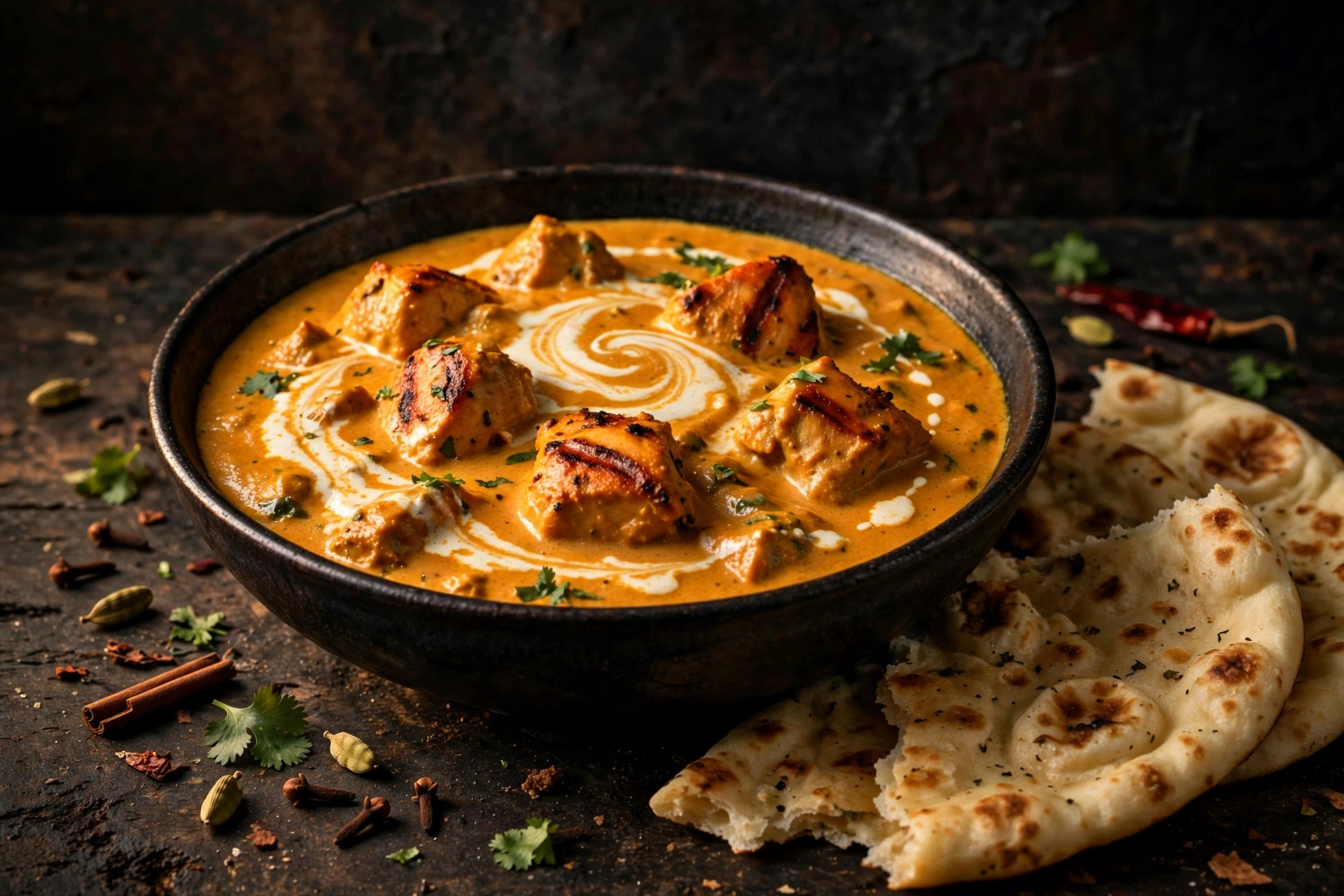
Every family has that one dish they always order out, and in my house, it is chicken tikka masala. For years I assumed restaurants had some secret I could never crack — until my neighbour, a former tandoor chef, watched me make it and laughed. ‘You are boiling the chicken in the sauce,’ he said. ‘That is your whole problem.’ This chicken tikka masala recipe comes from everything he taught me that evening, refined over twenty attempts in my own kitchen.
A great tikka masala comes down to two things most home cooks skip: charring the marinated chicken before it touches the gravy, and building the sauce in layers instead of dumping everything in at once. Get those right and nobody will believe it is homemade — I have served this to guests a dozen times, and someone always asks which restaurant I ordered from.
One honest note: this is not a 20-minute recipe. The chicken needs at least two hours in the marinade (overnight is better), and cooking takes about an hour — but most of that is hands-off simmering, and the result is worth planning ahead for.
Why You’ll Love This Recipe
- Real restaurant flavour — the charred edges on the chicken and the layered gravy give you that tandoor-house taste without owning a tandoor.
- Make-ahead friendly — the marinated chicken keeps for 24 hours in the fridge, and the finished curry honestly tastes even better the next day.
- Simple spice shelf — nothing exotic here. If you cook desi food at all, you already own every single spice on the list.
- Freezer-friendly — it freezes beautifully for up to 3 months, so I always double the batch and freeze half.
- A genuine crowd-pleaser — mild enough for kids as written, and easy to dial the heat up for the spice lovers at the table.
Ingredients
- For the chicken marinade: 800g (about 1¾ lbs) boneless chicken thighs, cut into 1½-inch cubes — thighs stay far juicier than breast
- 1 cup (240g) plain whole-milk yogurt, whisked smooth
- 2 tablespoons lemon juice
- 2 tablespoons mustard oil or neutral vegetable oil
- 1 tablespoon ginger-garlic paste
- 2 teaspoons Kashmiri red chilli powder (for colour without brutal heat)
- 1 teaspoon ground cumin
- 1 teaspoon garam masala
- 1 teaspoon salt
- For the gravy: 3 tablespoons ghee or butter
- 2 medium onions (about 250g), finely chopped
- 1 tablespoon ginger-garlic paste
- 400g (14 oz) canned crushed tomatoes, or 4 large fresh tomatoes blended smooth
- 1 teaspoon Kashmiri red chilli powder
- 1 teaspoon ground coriander
- ½ teaspoon turmeric powder
- 1 teaspoon kasuri methi (dried fenugreek leaves), crushed between your palms
- 1 cup (240ml) heavy cream, plus extra for drizzling
- 1 teaspoon sugar (this balances the tomato acidity — do not skip it)
- Salt to taste
- Fresh coriander leaves, chopped, for garnish
Instructions
- Marinate the chicken. In a large bowl, whisk together the yogurt, lemon juice, oil, ginger-garlic paste, Kashmiri chilli powder, cumin, garam masala and salt until completely smooth. Add the chicken cubes and turn them until every piece is thickly coated. Cover and refrigerate at least 2 hours — overnight gives deeper flavour and more tender meat.
- Char the chicken. Spread the marinated chicken in a single layer on a foil-lined tray (or thread onto skewers). Grill under a hot broiler for 10–12 minutes, turning once, until blackened spots appear on the edges. Do not cook it through — it finishes in the gravy. Those charred bits are the restaurant flavour, so let them get properly dark.
- Start the gravy base. While the chicken chars, melt the ghee in a heavy-bottomed pot over medium heat. Add the chopped onions with a pinch of salt and cook, stirring often, for 10–12 minutes until they turn deep golden brown. Do not rush this step — pale onions make a pale, flat-tasting gravy, while well-browned onions give you sweetness and body. If they start catching, splash in a tablespoon of water and keep stirring.
- Bloom the aromatics. Stir in the ginger-garlic paste and cook for 1 minute until the raw smell disappears. Add the Kashmiri chilli powder, ground coriander and turmeric, and stir constantly for 30 seconds. Spices burn fast in hot fat, so keep them moving — you want them fragrant and brick-red, not bitter and black.
- Add tomatoes and simmer. Pour in the crushed tomatoes and bring to a gentle simmer. Cook uncovered for 12–15 minutes until the sauce thickens and the ghee starts separating at the edges — that glistening separation is the classic sign of a properly cooked masala base. Skip it and the gravy tastes raw.
- Blend and enrich. For a silky restaurant-style gravy, blend the sauce smooth with an immersion blender (or let it cool slightly and use a regular blender). Return it to the pot over low heat. Crush the kasuri methi between your palms and stir it in along with the sugar and salt to taste. Pour in the cream slowly, stirring, and let the gravy warm through for 2–3 minutes without boiling hard.
- Combine and finish cooking. Slide the charred chicken pieces — along with any juices from the tray — into the gravy. Simmer gently for 8–10 minutes until the chicken is cooked through and has soaked up the sauce. Taste and adjust: more salt if flat, a pinch more sugar if the tomatoes still taste sharp, another spoon of cream if you want it richer.
- Serve it properly. Ladle into a warm serving bowl, drizzle with a swirl of cream, and scatter fresh coriander over the top. Serve hot with butter naan, jeera rice, or both — and put the raita on the table, because someone always wants it.
Pro Tips
- Thighs beat breast, always. Chicken breast dries out during the double cooking (char + simmer). Thighs stay juicy even if you overshoot the timing by a few minutes.
- Do not crowd the charring tray. Pieces crammed together steam instead of charring. Use two trays if needed — the browning is non-negotiable for the flavour.
- Kashmiri chilli is about colour, not heat. It gives that gorgeous deep-red restaurant gravy. If you only have regular hot chilli powder, use half the amount and accept a slightly less vibrant colour.
- Kasuri methi is the secret ingredient. Most home cooks skip it, and most restaurant curries would taste flat without it. Crush it fresh between your palms right before adding — pre-ground just does not hit the same.
- Next-day leftovers win. Like most tomato-based curries, this tastes better after a night in the fridge. Cooking for guests? Make it the day before and reheat gently.
Chicken Tikka Masala Recipe – FAQs
Can I make this without a broiler or barbecue?
Yes. A screaming-hot cast iron skillet works well — sear the marinated chicken in batches for 2–3 minutes per side until charred spots appear. You can also use an air fryer at 200°C (400°F) for 10–12 minutes. The goal is browning, not full cooking, so any high-heat method does the job.
Why is my gravy pale and thin compared to restaurants?
Usually three culprits: onions not browned deeply enough, tomato base not cooked until the fat separated, or sauce not blended. Fix all three for that thick, glossy, deep-orange gravy — and use Kashmiri chilli powder for colour.
Can I make a lighter version with less cream?
You can replace half the cream with thick yogurt (whisk it smooth and add it off the heat so it does not split), or use evaporated milk. It will not be quite as luxurious, but still very good. I would not skip the cream entirely — the dish is built around that richness.
How spicy is this recipe?
As written, it is a medium — warm and flavourful but not punishing, and my kids eat it happily. To turn up the heat, add 1–2 slit green chillies with the tomatoes, or bump the Kashmiri chilli powder to a full tablespoon plus half a teaspoon of regular hot chilli powder.
That is the chicken tikka masala recipe that finally closed the gap between my kitchen and my favourite restaurant. Make it once as written, then tweak it — more char, more cream, more heat. That is how family recipes are born.