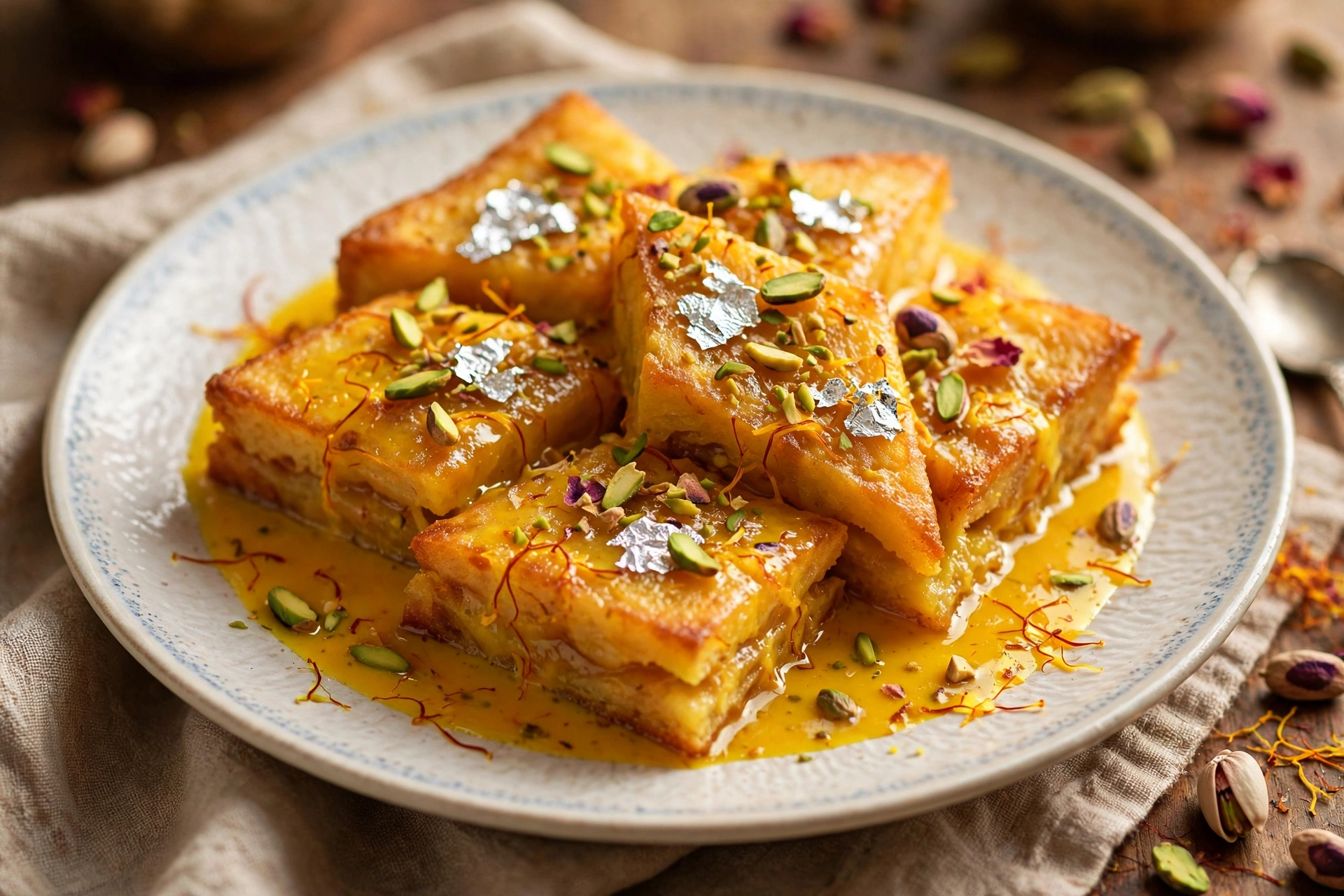
Some desserts impress with technique; others impress with sheer, unapologetic indulgence. Shahi tukda is firmly in the second camp. The first time I made this shahi tukda recipe for Eid, my uncle — a man who critiques every dessert put in front of him — went quiet after one bite and then asked for the recipe. Fried bread soaked in saffron syrup, layered with thick rabri, crowned with pistachios. It’s Mughlai royalty on a plate, and it’s far easier than it looks.
Shahi tukda literally means “royal piece,” and it comes straight from the Mughal kitchens, where stale bread was transformed into dessert rather than wasted. That frugal origin is almost funny given how luxurious the result tastes. The magic is in the contrasts: crisp, buttery fried bread against cool, creamy rabri, with saffron and cardamom weaving through everything. Served chilled, it’s one of those desserts that tastes better than the sum of its parts.
My first attempt taught me the two things that matter most. One: the bread must be fried until genuinely crisp and golden — any softness turns to mush under the rabri. Two: the rabri should be thick enough to sit on the bread, not run off it. I now reduce the milk patiently and never rush it, because thin rabri is the difference between shahi tukda and sweet bread soup.
This recipe serves 6 to 8 and is ideal made a few hours ahead — it needs chilling time anyway. Perfect for dawats, Eid, Diwali, or any evening when only something royal will do.
Why You’ll Love This Shahi Tukda Recipe
- True Mughlai flavor — saffron, cardamom, and slow-reduced rabri give it authentic royal-kitchen depth.
- Make-ahead perfect — it actually needs 2 to 3 hours of chilling, so it’s ideal for entertaining.
- Uses simple bread — day-old white bread works best, so it’s thrifty as well as delicious.
- Stunning presentation — golden bread, white rabri, green pistachios, and silver varq if you’re feeling fancy.
- Customizable sweetness — adjust the syrup to your taste; the method stays the same.
- No oven needed — stovetop only, from start to finish.
Ingredients
- For the fried bread:
- White bread slices — 8 to 10, preferably a day old (slightly stale bread fries crisper)
- Ghee — ¾ cup (170 g) for shallow frying (ghee gives unmatched flavor; oil works in a pinch)
- For the sugar syrup:
- Sugar — 1 cup (200 g)
- Water — ½ cup (120 ml)
- Green cardamom — 4 pods, lightly crushed
- Saffron — a generous pinch, soaked in 1 tablespoon warm milk
- Rose water — 1 teaspoon (optional but lovely)
- For the rabri:
- Full-cream milk — 1 liter (about 4¼ cups)
- Sugar — ⅓ cup (65 g), adjust to taste
- Green cardamom powder — ½ teaspoon
- Saffron — a pinch, soaked in 1 tablespoon warm milk
- For garnish:
- Pistachios — ¼ cup, thinly sliced
- Almonds — 2 tablespoons, slivered
- Dried rose petals — 1 tablespoon (optional)
- Silver varq — 2 to 3 sheets (optional, for special occasions)
Instructions
- Prepare the bread. Trim the crusts off the bread slices and cut each slice diagonally into two triangles — triangles look elegant and soak syrup more evenly than whole squares. If your bread is very fresh, leave the triangles out on a tray for 30 minutes to dry slightly; this helps them fry up crisp instead of absorbing too much ghee.
- Make the sugar syrup. Combine the sugar, water, and crushed cardamom pods in a small saucepan. Bring to a boil, stirring until the sugar dissolves, then simmer for 4 to 5 minutes until slightly sticky — you’re aiming for a light one-thread consistency, not a thick candy syrup. Stir in the saffron milk and rose water, then take off the heat and keep warm. The syrup should be warm (not boiling hot) when the bread goes in, so it absorbs without turning soggy.
- Fry the bread until deeply golden. Heat the ghee in a wide, heavy pan over medium heat. Fry the bread triangles in batches, about 1½ to 2 minutes per side, until they’re a rich, even golden brown and feel crisp. Don’t crowd the pan — the temperature drops and the bread steams instead of crisping. Drain on a wire rack. The bread should audibly crunch when tapped; if any piece feels soft in the middle, give it another 30 seconds.
- Soak in syrup — briefly. Working with warm (not hot) syrup, dip each fried triangle in for literally 5 to 8 seconds per side, then lift out and let the excess drip off. This is a quick bath, not a soak — the bread should be moistened and sweetened, still holding its crisp structure. Arrange the soaked triangles in a single layer in a serving dish. This restraint is what separates great shahi tukda from a soggy mess, so don’t get generous here.
- Make the rabri. Pour the milk into a wide, heavy-bottomed pan (wide surface area speeds reduction) and bring to a boil, then lower to a steady simmer. Stir frequently, scraping the sides and bottom, letting the milk reduce slowly. As a skin (malai) forms, fold it back into the milk rather than discarding it — those folds become the rabri’s characteristic texture. After 35 to 45 minutes, the milk should be reduced to about one-third, thick enough to coat a spoon heavily. Stir in the sugar, cardamom powder, and saffron milk, simmer 5 more minutes, then cool to room temperature. It thickens further as it cools.
- Assemble the layers. Spoon the cooled rabri generously over the syrup-soaked bread, spreading it right to the edges so every triangle gets covered. If you have extra bread and rabri, make a second layer — shahi tukda is wonderful doubled. Smooth the top with the back of a spoon.
- Garnish like royalty. Scatter the sliced pistachios and slivered almonds evenly over the rabri. Add dried rose petals for color, and if you’re serving this at a celebration, lay the silver varq sheets gently on top — press very lightly with the back of a dry spoon to adhere. The contrast of green nuts against white rabri is half the visual appeal, so don’t skimp.
- Chill before serving. Cover the dish with cling film (don’t let it touch the surface) and refrigerate for at least 2 to 3 hours, or overnight. Chilling firms everything up and lets the flavors marry — warm shahi tukda is pleasant, but cold shahi tukda is transcendent. Serve chilled, cut into portions.
Pro Tips
- Day-old bread is better. Fresh soft bread absorbs too much ghee and collapses. Slightly stale bread fries up shatteringly crisp and holds its shape under rabri.
- Ghee over oil for frying. It’s pricier, but the nutty aroma ghee gives the bread is a huge part of the final flavor. This is a royal dessert — splurge a little.
- Warm syrup, crisp bread. If the syrup is boiling hot, the bread disintegrates; if cold, it won’t absorb. Warm to the touch is the target.
- Don’t walk away from the rabri. Milk scorches in seconds once it thickens. Keep the heat moderate and stir often, especially in the last 15 minutes.
- Fold the malai, don’t skim it. Those creamy skin folds are what give rabri its luxurious texture. Skimming them off leaves you with merely thick milk.
- Taste the rabri before assembling. It should be fragrant and just sweet enough — remember the bread is already sweetened with syrup, so the rabri can be a touch less sweet than you’d expect.
- Assemble close to serving day. The assembled dessert keeps beautifully for 2 days refrigerated, but beyond that the bread softens too much. For peak texture, assemble the morning of your event.
Serving Suggestions
Shahi tukda needs no accompaniment — serve it chilled in its dish and let guests admire the garnish before cutting portions. After a rich biryani or karahi, something cool and sweet is exactly what’s wanted.
FAQs
Can I use condensed milk to speed up the rabri?
You can shortcut with a tin of condensed milk simmered with a little regular milk for 15 minutes, but the flavor won’t match slow-reduced rabri — condensed milk brings a cooked-sugar note that’s different from fresh malai. For a special occasion, do it properly; for a weeknight craving, the shortcut is acceptable.
My bread turned soggy. What went wrong?
Three likely causes: the bread wasn’t fried crisp enough, the syrup was too hot, or the triangles soaked too long. Fry until genuinely crunchy, keep the syrup just warm, and limit the dip to a few seconds per side. The bread should still feel firm when it comes out of the syrup.
Can I make shahi tukda less sweet?
Yes — reduce the sugar in the syrup to ¾ cup and cut the rabri sugar to ¼ cup. The dessert will still taste indulgent because of the ghee-fried bread and creamy rabri. Don’t eliminate the syrup entirely, though; it’s part of the dish’s identity.
How far ahead can I make it?
The components can be made separately up to 2 days ahead (fried bread stored airtight at room temperature, rabri refrigerated). Assemble and chill at least 3 hours before serving, and serve within 2 days of assembling for the best texture.
There it is — shahi tukda worthy of its name. Crisp saffron-kissed bread, cool cardamom rabri, and that crown of pistachios. Make it for your next dawat and watch the dessert plate come back empty.