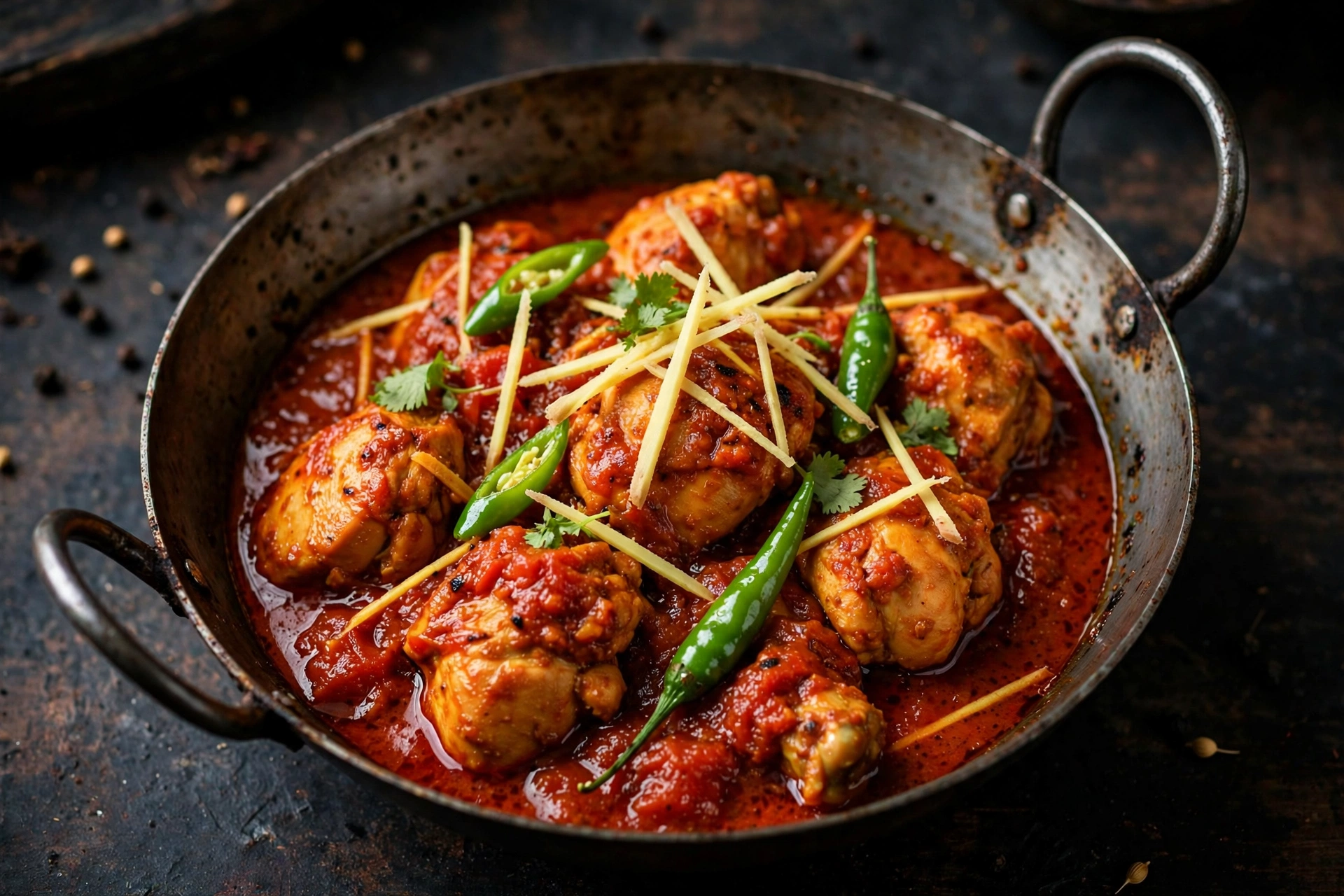
A proper chicken karahi recipe does not need twenty spices or an hour of slow cooking. Real dhaba karahi — the kind served sizzling in a blackened wok on the roadside between Lahore and Gujranwala — is built on just five things: good chicken, ripe tomatoes, fresh ginger, green chilies, and fearless heat. I have been chasing that exact flavor at home for years, and this is the chicken karahi recipe that finally got my father’s nod of approval, which, if you know Pakistani fathers, is harder to earn than any cooking certificate.
What makes karahi different from every other curry is what it leaves out. There is no onion paste, no long simmering, no powdered spice mountain. The tomatoes break down fast over high heat into a thick, glossy masala that clings to the chicken instead of swimming around it. Done right, the whole dish takes about 35 minutes from chopping board to table.
Here is my dhaba-style chicken karahi recipe, step by step, with the small details that make it taste like it came off a roadside flame.
Why You Will Love This Chicken Karahi Recipe
- Authentic dhaba flavor with only a handful of everyday ingredients
- Ready in about 35 minutes — faster than most curries
- No onion paste, no complicated spice blends, no fuss
- The high-heat technique gives you that signature smoky wok taste
- Uses one pan from start to finish, so cleanup is easy
Ingredients
- 1 kg (2.2 lbs) chicken, bone-in, cut into karahi-sized pieces
- 750 g (about 5 medium) ripe red tomatoes, roughly chopped
- 1/2 cup (120 ml) cooking oil or ghee (ghee tastes better, oil is lighter)
- 1 tablespoon ginger-garlic paste
- 1 tablespoon crushed coriander seeds
- 1 teaspoon crushed black peppercorns
- 1 teaspoon red chili flakes (adjust to your heat tolerance)
- 1 teaspoon cumin seeds
- 1 teaspoon salt, plus more to taste
- 1/2 teaspoon turmeric powder
- 4 to 6 green chilies, slit lengthwise
- 1-inch piece fresh ginger, cut into thin juliennes, for garnish
- 1/4 cup fresh coriander leaves, chopped, for garnish
- 2 tablespoons yogurt (optional, for a slightly richer gravy)
Instructions
- Start hot and stay hot. Place your karahi or a deep heavy wok over high heat and add the oil. When it shimmers, add the cumin seeds and let them crackle for about 20 seconds. Add the chicken pieces in a single layer — do not crowd the pan, or the chicken will steam instead of sear. Let the pieces sit undisturbed for 3 to 4 minutes until the undersides turn golden, then turn them and sear the other side. This initial sear is where the dhaba flavor begins, so do not rush it by lowering the heat.
- Add the ginger-garlic paste and the tomatoes. Stir in the ginger-garlic paste and cook for one minute until the raw smell disappears. Now add all the chopped tomatoes, the turmeric, and the salt. Keep the heat on high and stir every minute or so. The tomatoes will release their water first, then slowly collapse into a thick pulp. This takes about 10 to 12 minutes. You will know it is ready when the raw tomato smell is completely gone and the mixture looks like a rough, jammy sauce rather than distinct tomato pieces.
- Bhunofy the masala until the oil separates. This is the most important ten minutes of the whole chicken karahi recipe. Keep stirring and cooking the tomato-chicken mixture on medium-high heat. The water will evaporate, the masala will darken from bright red to a deeper brick red, and you will see oil glistening at the edges. Scrape the browned bits from the bottom of the pan as you go — that is pure flavor. If the masala starts sticking before the tomatoes are fully broken down, add two tablespoons of hot water, never cold, which would shock the pan and toughen the chicken.
- Add the signature karahi spices. Now stir in the crushed coriander seeds, crushed black pepper, and red chili flakes. These go in late, not early, because that is how the dhabas do it — the spices stay punchy and aromatic instead of getting muted by long cooking. If you like a slightly richer gravy, this is when you stir in the two tablespoons of yogurt. Cook for another 5 minutes, stirring, until everything is glossy and the chicken is completely tender. Poke the thickest piece with a knife; the juices should run clear.
- Finish like a dhaba cook. Taste and adjust the salt. Toss in the slit green chilies and half of the ginger juliennes, and cook for 2 final minutes so the chilies soften just slightly but keep their bite. Transfer to a serving dish — or serve straight from the karahi if you want the full roadside effect — and shower the top with the remaining fresh ginger juliennes and chopped coriander. Serve immediately with blazing-hot naan or tandoori roti. Karahi waits for no one; it is best eaten the minute it leaves the flame.
Pro Tips
- Tomato ripeness is everything. Pale, firm supermarket tomatoes will give you a sour, thin masala no matter what you do. Use the ripest, reddest, almost-too-soft tomatoes you can find — in summer, desi tomatoes are unbeatable for this.
- Crush your own coriander seeds and black pepper in a mortar and pestle instead of using pre-ground powder. The difference in aroma is enormous, and it is genuinely a two-minute job.
- Do not add water unless the masala is actually sticking. Karahi is supposed to be thick enough to scoop with bread, not a soupy curry. Patience on high heat does the thickening for you.
- Bone-in chicken is non-negotiable for authentic flavor. The bones release gelatin and flavor into the masala during the bhunofying stage. Boneless works in a hurry, but it will never taste like dhaba karahi.
- If your home stove cannot get screaming hot like a dhaba burner, cook in two smaller batches. Crowding the pan drops the temperature and you lose the sear, which is the whole soul of the dish.
- Leftover karahi makes an incredible filling for paratha rolls the next day. Shred the chicken, warm it with the masala, and wrap it in a flaky paratha with sliced onions.
FAQs
What is the difference between karahi and a regular chicken curry?
Karahi uses no onion paste and cooks fast over very high heat in a wok-like pan, giving a thick, tomato-forward masala with a slightly smoky char. Regular curries usually start with browned onions, use more powdered spices, and simmer longer for a deeper, mellower gravy. They are completely different dishes despite sharing some spices.
Can I make this chicken karahi recipe less spicy?
Absolutely. Cut the red chili flakes in half and use only 2 green chilies, removing their seeds first since most of the heat lives there. The black pepper also adds warmth, so you can reduce that slightly too. The dish will still taste like karahi — just a gentler one.
Why is my karahi watery instead of thick?
You pulled it off the heat too early. The bhunofying stage cannot be rushed — keep cooking and stirring until the oil visibly separates and the masala holds its shape when you drag a spoon through it. Under-ripe tomatoes with too much water content can also cause this, which is why ripe tomatoes matter so much.
Can I use ghee instead of oil?
Yes, and many dhaba cooks swear by it. Ghee adds a wonderful nutty richness. You can also do half oil and half ghee as a compromise. Just keep in mind that ghee burns faster than oil, so watch the heat during the initial sear.
That is my dhaba-style chicken karahi recipe, honed over years of Sunday experiments and one very patient father. Make it on a night when you can eat it straight off the flame with hot naan, and you will understand why this simple dish has a cult following across Pakistan.