Baby’s First Khichdi Recipe – Easy Desi Baby Food (6+ Months)
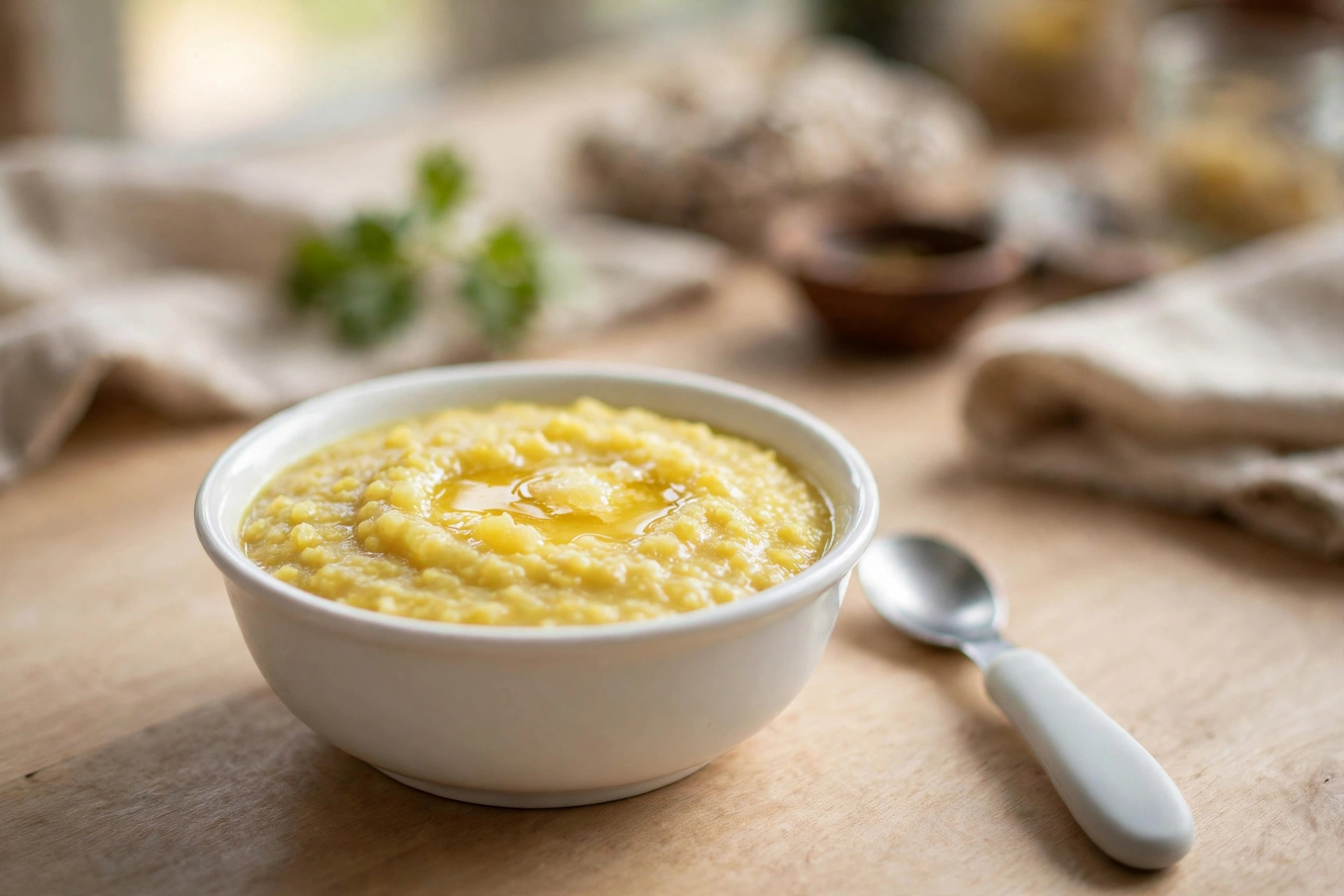
The first time I fed my niece her first real spoonful of solid food, it was khichdi — soft, warm moong dal khichdi with a drop of ghee, mashed almost to a porridge. She was six and a half months old, sitting in her high chair with that very serious baby expression. The moment that spoon touched her lips she went completely still — then opened her mouth wider for the next one. My sister whispered, “Nani sahi kehti thin — khichdi is the answer.”
In desi homes, khichdi is a rite of passage. When a baby is ready for solids — usually around six months, though only your pediatrician can tell you when your baby is ready — most nanis and dadis reach for the same thing: moong dal and rice, cooked soft enough to melt on the tongue. No masala, no mirch, no namak at first — just simple, clean flavor a tiny new eater can handle.
This baby’s first khichdi recipe keeps everything as simple as it should be, with real measurements and exact cooking times. It makes about 3–4 baby servings (roughly 2 cups), because leftovers keep well and you will want them.
Why You’ll Love This Baby’s First Khichdi
- Gentle first solid – moong dal and rice are among the foods many desi families have trusted for generations when starting babies on solids.
- One pot, 25 minutes – a single pressure cooker or pot, almost no dishes, and it practically cooks itself.
- Real ingredients only – no sugar, no salt, no spices, nothing a tiny tummy cannot handle.
- Grows with your baby – mash it smooth for a six-month-old, leave it slightly textured for an older baby.
Important note: every baby is different, and the right time to start solids varies. Talk to your pediatrician before introducing any new food, and follow their guidance on timing, portion sizes, and how to watch for any reactions.
Ingredients
Makes about 3–4 baby servings (roughly 2 cups cooked). Moong dal is the lightest dal and cooks the fastest — that is exactly why it is the classic choice for a baby’s first khichdi. No onion, tomato, or garlic at this stage; those come later, once your baby is eating comfortably and your pediatrician gives the green light.
- Moong dal (split yellow lentils), rinsed – 1/4 cup (about 50 g)
- Basmati or any short-grain rice, rinsed – 1/4 cup (about 50 g)
- Water – 2 cups (500 ml), plus more if needed
- Desi ghee – 1 tsp (added at the end)
- Turmeric powder (haldi) – a tiny pinch (1/8 tsp, optional)
- Salt – none for babies under 12 months
- Whole spices (zeera, elaichi) – none for a first khichdi
How to Make Baby’s First Khichdi – Step by Step
Step 1: Rinse and Soak
Rinse the moong dal and rice together under cold running water until it runs mostly clear — about 3–4 rinses. Then soak in fresh water for 20–30 minutes. Soaking is the small step that makes a big difference: soaked dal and rice cook faster and turn softer, which is exactly what we want. Drain before cooking.
Step 2: Cook It Soft
Put the drained dal and rice in a pressure cooker with 2 cups of water and the tiny pinch of turmeric (if using). Close the lid and cook on medium-high heat for 4–5 whistles, then turn the heat to low and let it sit 5 more minutes before releasing the pressure naturally.
No pressure cooker? Use a heavy-bottomed pot with a tight lid: bring to a boil, then reduce to the lowest simmer and cook covered for 40–45 minutes, stirring once or twice and adding a splash of hot water if it gets too thick. You want it overcooked — grains completely soft and starting to fall apart.
Step 3: Mash to the Right Texture
Open the cooker and stir well. For a six-month-old just starting out, mash thoroughly with the back of a spoon until it is a smooth, thick porridge — or press it through a fine strainer if your baby needs it silky.
For a seven- or eight-month-old who is handling texture, mash lightly and leave it slightly lumpy — this is how babies learn to chew. Add a little boiled, cooled water or breast milk/formula to thin it if needed. The consistency should be like thick porridge: it should hold on a spoon but drop off slowly.
Step 4: Finish with Ghee
Stir in 1 teaspoon of desi ghee while the khichdi is still warm. Ghee is what gives khichdi its familiar desi taste, and a small amount is part of how our families have always served it. Then let it cool to lukewarm before serving — always test a drop on the inside of your wrist first. It should feel comfortably warm, never hot.
Step 5: Serve Small and Slow
Offer 1–2 teaspoons to start. Yes, really — that is a proper first serving. Some babies take to it instantly; others need a few days of tiny tastes before they get the idea. Both are completely normal. Sit with your baby, stay calm, and never force a spoonful. Ek do chamach aaj, kal zyada — baby apni raftaar se seekhta hai.
Pro Tips for Perfect Baby Khichdi
- Water ratio matters. 2 cups of water to 1/2 cup of combined dal and rice gives that soft porridge texture. For a smoother finish, go up to 2.5 cups — babies handle runny better than thick.
- Batch-cook smart. Fresh khichdi tastes best, but refrigerate leftovers in a clean airtight container for up to 24 hours, or freeze in small portions (ice-cube trays work brilliantly) for up to a month. Reheat gently with a splash of water.
- No salt for babies under one — and no honey, ever. Salt is off-limits for developing kidneys, and honey is not safe for babies under 12 months. Khichdi without either tastes perfect to a baby’s fresh palate.
- Watch, don’t assume. Serve khichdi alone the first time (no new foods the same day) so you can see how your baby responds. Give it 2–3 days before adding anything new.
Variations (For When Your Baby Is Ready)
This first khichdi is deliberately plain. Once your baby is eating it happily and your pediatrician says it is fine to expand, here are gentle next steps — one at a time, each introduced on its own for a few days first:
- Veggie khichdi: add 2–3 tablespoons of finely diced carrot or peeled lauki (bottle gourd) to the cooker with the dal and rice — both cook soft and mash in easily.
- Palak khichdi: a small handful (about 20 g) of washed, chopped palak stirred in during the last 5 minutes of cooking.
- Sweet potato khichdi: replace half the rice with peeled, diced sweet potato for a naturally sweeter version most babies adore.
- Zeera khichdi (8+ months): a tiny tadka of 1/2 tsp ghee with a pinch of zeera poured over and mixed in — many babies love the new aroma.
FAQs
When can I start giving my baby khichdi?
Most babies start solids around six months, but readiness varies — good head control, sitting with support, and interest in food are common signs. Your pediatrician is the right person to confirm timing for your baby, so check with them first.
How much khichdi should a 6-month-old eat?
Start with 1–2 teaspoons once a day. Over the following weeks, many babies work up to a few tablespoons per meal. Follow your baby’s cues — turning the head away or pushing the spoon means “all done,” and that deserves respect, not a battle.
Can I store leftover khichdi?
Yes. Cool it quickly, then refrigerate in a clean, airtight container for up to 24 hours, or freeze in small portions (ice-cube trays work brilliantly) for up to a month. Reheat until steaming, stir in a splash of water, and cool to lukewarm before serving. Never reheat baby food more than once.
My baby spat it out — does that mean they don’t like it?
Not necessarily. The tongue-thrust reflex is still fading, and it can take 8–10 exposures before a baby accepts a new food. Keep offering tiny amounts without pressure and try again in a day or two.
Is ghee safe for babies?
A small amount of ghee in food is a normal part of desi family cooking and has been used for babies for generations. That said, portion size and timing are personal — ask your pediatrician what amount suits your baby.
Conclusion
Baby’s first khichdi is one of those small kitchen moments that ends up feeling big — the first time your little one eats what the family eats, just in their own gentle version. This recipe keeps it exactly as simple as it should be: moong dal, rice, water, a drop of ghee, and patience.
Start tiny, follow your baby’s pace, and keep your pediatrician in the loop. Before you know it, that serious baby face will light up at the sight of the yellow bowl. Khush raho, aur khilao pyar se.