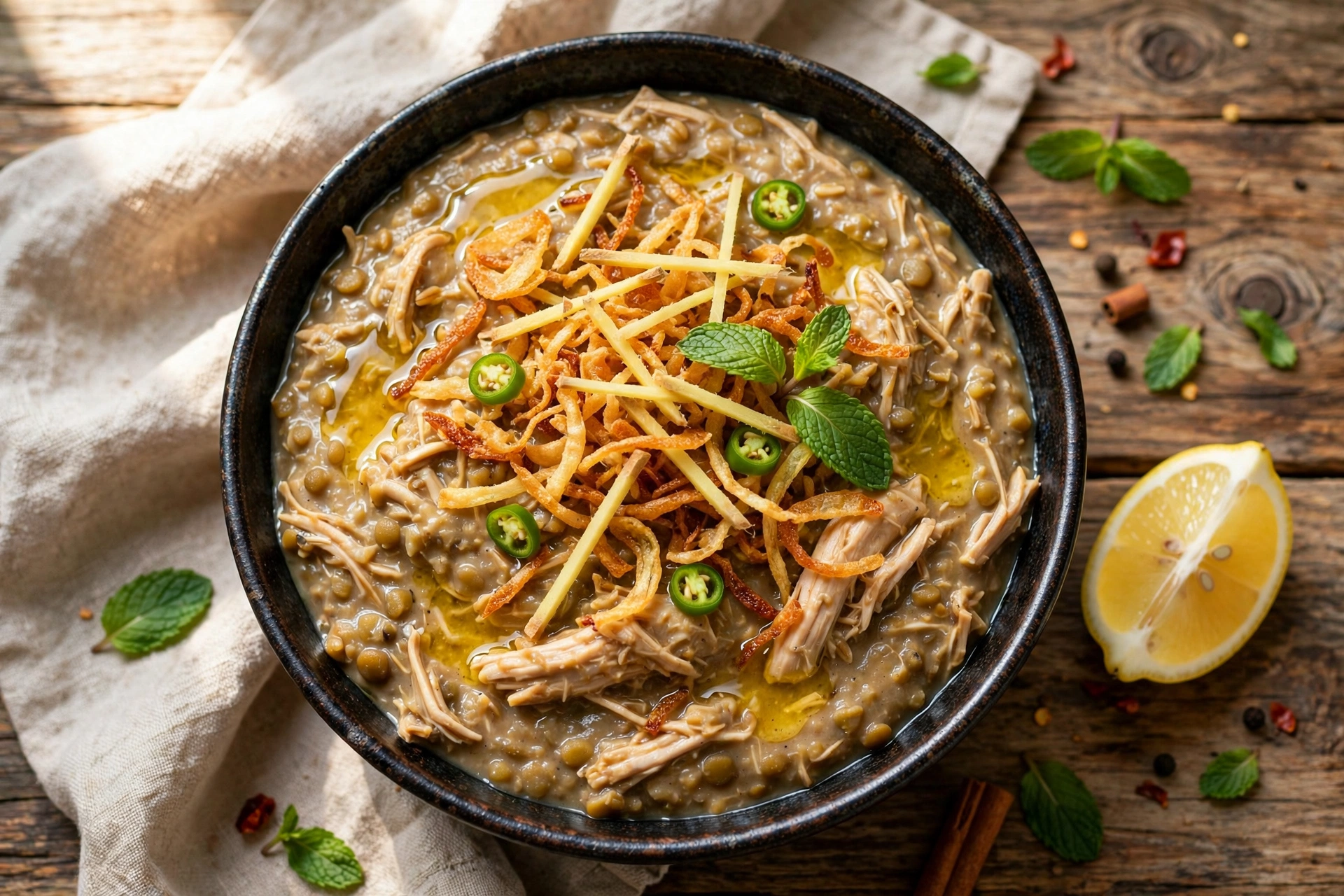
Chicken Haleem Recipe – Slow-Cooked Pakistani Lentil & Wheat Stew
There are dishes you eat, and dishes you remember. Chicken haleem is the second kind. One spoonful of this thick, silky, slow-cooked stew — shredded chicken melted into pounded wheat and lentils, crowned with crispy fried onions, ginger juliennes, and lemon — and you understand why people queue outside haleem shops every evening.
Haleem is not fast food, and that is exactly its magic. It teaches patience: hours of gentle simmering turn humble wheat, dals, and chicken into something deeply rich. Garam haleem on a cold evening, with fresh naan — bas, dil khush ho jata hai.
But here is the good news: you do not need a giant degh or a whole day off to make it. This chicken haleem recipe is made for the home kitchen — easy shortcuts, no compromise on real flavor. Follow the steps, respect the timing, and your family will ask for it again and again.
Why You’ll Love This Chicken Haleem
- Authentic bazaar-style taste – thick, glossy, and full of deep spices.
- One-pot comfort – everything cooks together, fewer dishes to wash.
- Budget-friendly – a small amount of chicken stretches into a huge, filling pot.
- Perfect for gatherings – feeds a crowd easily, and it reheats beautifully.
- Naturally nutritious – packed with protein from chicken, wheat, and mixed lentils.
Ingredients
This recipe serves 8–10 generous portions. Yes, it makes a big pot — haleem is meant to be shared. (Aur agar bach jaye, to next day it tastes even better.)
For the Haleem Base
- Chicken (bone-in, cut in 8 pieces) – 750 g
- Wheat (gandum), soaked overnight – 1 cup (200 g)
- Chana dal (split Bengal gram), soaked 4 hours – ½ cup (100 g)
- Moong dal (split yellow lentils), soaked 4 hours – ½ cup (100 g)
- Masoor dal (red lentils), soaked 4 hours – ¼ cup (50 g)
- Urad dal (white, with skin removed) – 2 tbsp
- Barley (jau), soaked overnight – 2 tbsp (optional but authentic)
- Onions, finely sliced – 3 medium (about 400 g)
- Fresh ginger paste – 2 tbsp
- Garlic paste – 2 tbsp
- Yogurt (dahi), whisked – 1 cup (250 g)
- Cooking oil or ghee – 1 cup (200 ml)
- Salt – 2½ tsp (adjust to taste)
- Red chili powder – 2 tsp
- Turmeric powder (haldi) – 1 tsp
- Coriander powder (dhania) – 2 tsp
- Garam masala – 1½ tsp
- Whole spice mix (potli): 4 green cardamoms, 4 cloves, 1 black cardamom, 1-inch cinnamon stick, 1 bay leaf
- Water – 8–9 cups (2 liters) for cooking, plus more as needed
For the Tadka / Finishing
- Ghee – 3 tbsp
- Sliced onion – 1 medium, for crispy fried onions
- Cumin seeds (zeera) – 1 tsp
- Dried red chilies – 3–4
For Garnish (the best part!)
- Fresh ginger, cut into fine juliennes – 2 tbsp
- Fresh green chilies, thinly sliced – 4–5
- Fresh mint leaves, chopped – ¼ cup
- Fresh coriander, chopped – ¼ cup
- Lemon wedges – 2–3
- Crispy fried onions – ½ cup
- Chaat masala – to sprinkle
- Desi ghee – a drizzle on top
Step-by-Step Instructions
Step 1: Soak the Grains and Lentils
Rinse the wheat and barley well, cover with plenty of water, and soak overnight (8–10 hours). Soak the dals separately for at least 4 hours. Soaking shortens cooking time and gives haleem its smooth, creamy texture. Drain and rinse before cooking.
Step 2: Cook the Lentils and Wheat
In a large heavy-bottomed pot, add the drained wheat, barley, and all soaked lentils with 5 cups water, 1 tsp salt, and ½ tsp turmeric. Cook until completely soft and mushy — 45–50 minutes in a pot, or 15–18 minutes after the first whistle in a pressure cooker. Set aside; do not drain.
Step 3: Brown the Onions
In another large, deep pot, heat the oil over medium-high heat. Fry the sliced onions, stirring often, until they turn deep golden brown — this takes 10–12 minutes. Do not rush this; browned onions are the flavor foundation of good haleem. Remove half the onions with a slotted spoon and set aside for garnish. The other half stays in the pot.
Step 4: Cook the Chicken Masala
To the onions, add ginger paste, garlic paste, and the whole spices. Sizzle 30 seconds, then add chicken. Fry 5–6 minutes on medium-high until it changes color. Add the red chili powder, remaining turmeric, coriander powder, garam masala, and remaining salt; stir 2 minutes. Add whisked yogurt and cook until the oil separates from the masala — about 8–10 minutes. This bhunai step decides how rich your haleem tastes, so give it full attention.
Step 5: Combine Everything
Add the cooked lentil-wheat mixture (with its water) into the chicken masala pot, plus 3–4 cups of hot water, and stir well. Bring to a gentle boil, lower to the lowest heat, cover partially, and simmer for 1½ to 2 hours, stirring every 15–20 minutes and scraping the bottom. The chicken will fall off the bones and the grains will melt into the gravy.
Step 6: Pound and Shred (the Haleem Touch)
After simmering, remove from heat and fish out the bones with tongs — they should slide out easily. Then, using a wooden spoon or potato masher, pound and stir the haleem vigorously for 10 minutes. This pounding creates the signature thick, stretchy, silk-smooth texture. An immersion blender works too (30-second pulses, do not over-blend). Too thick? Splash in hot water. Too thin? Simmer uncovered 15 more minutes.
Step 7: The Finishing Tadka
Heat the ghee in a small pan. Add cumin seeds and dried red chilies; when they crackle, pour this hot tadka over the haleem and mix.
Step 8: Serve Like a Haleem Shop
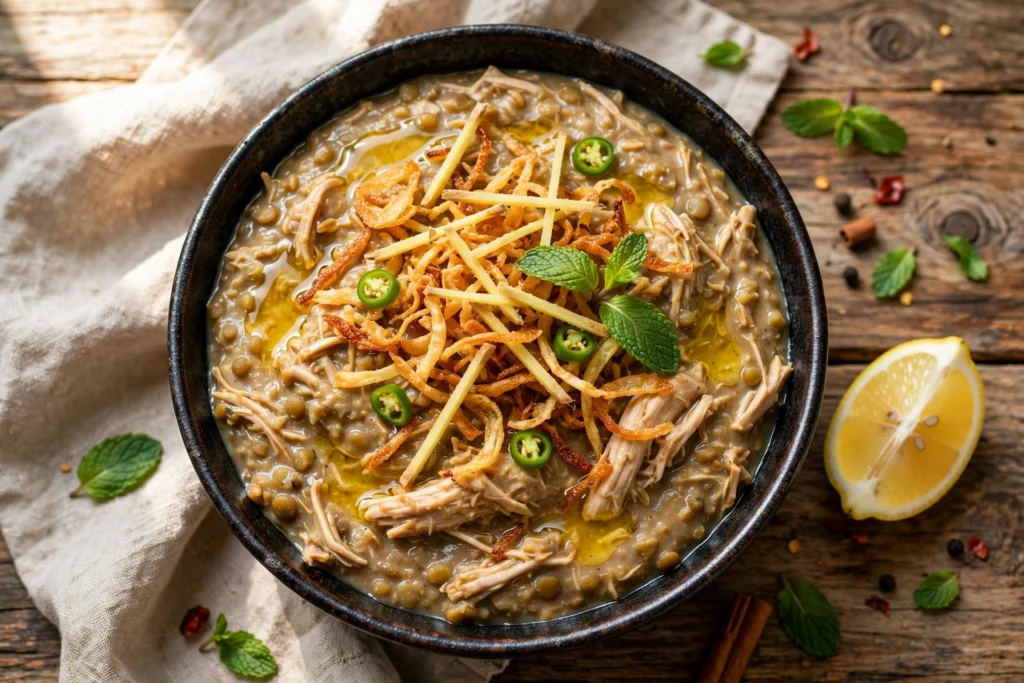
Ladle the hot haleem into bowls. Top generously with the reserved crispy onions, ginger juliennes, green chilies, mint, coriander, a sprinkle of chaat masala, lemon wedges on the side, and a thin drizzle of desi ghee. Serve immediately with fresh tandoori naan or kulcha. Khana tayyar hai!
Pro Tips for Perfect Haleem
- Never skip soaking. Unsoaked wheat can leave hard bits in your haleem.
- Low and slow wins. High flame burns the bottom and turns the taste bitter.
- Use a heavy pot. Thick-bottomed pots distribute heat evenly and prevent sticking.
- Bones mean flavor. Bone-in chicken tastes far richer than boneless.
- Make it a day ahead. Haleem tastes even better the next day. Reheat gently with a splash of water.
Variations
Mutton Haleem: Replace chicken with 750 g bone-in mutton. Brown and cook it for 1 hour before adding the lentils, then simmer everything together for another 1½ hours. Richer, more traditional — and absolutely worth the extra time.
Beef Haleem: Same method as mutton; use beef shank or chuck. Beef haleem is the classic wedding/Muharram version in many families.
Vegetarian Haleem: Skip the meat entirely and add 1 cup of mixed vegetables (carrots, pumpkin, peas) with the lentils, plus 2 tbsp extra ghee.
Instant Pot Method: Sauté everything in the Instant Pot, pressure cook on high for 25 minutes with natural release, then pound as usual. Done in half the time.
FAQs
Can I make haleem without overnight soaking?
You can use a pressure cooker to force-cook unsoaked wheat and lentils, but the texture will be slightly less smooth. For the best, classic result, overnight soaking really is worth it.
Why is my haleem watery?
Either too much water was added or the pounding step was skipped. Simmer uncovered to thicken, then pound vigorously — that is what develops the thick body.
Can I freeze haleem?
Yes! Haleem freezes beautifully for up to 2 months. Cool completely, portion into airtight containers, and thaw overnight in the fridge. Reheat on low heat with a splash of water, stirring often.
Is haleem healthy?
Haleem is a genuinely nutritious dish — high in protein, fiber, iron, and B vitamins from the meat, wheat, and lentils. To lighten it up, reduce the oil to ½ cup, skip the final ghee drizzle, and load up on fresh garnishes.
What is the difference between haleem and khichda?
They are close cousins. Haleem is pounded to a completely smooth, silky consistency, while khichda keeps the grains and lentils more whole and recognizable. Same family, different texture.
Conclusion
Chicken haleem is one of those rare dishes that is both a humble home meal and a celebration food. It feeds a crowd, freezes well, tastes better the next day, and fills the house with the kind of aroma that brings everyone to the kitchen asking, “kitchen mein kya ban raha hai?”
So pick a lazy weekend, soak your grains tonight, and give this recipe a try. Take your time — haleem rewards patience like nothing else. And when you serve it with that dramatic garnish platter, do not be surprised if your family declares you the official haleem expert of the house.
Happy cooking, aur haleem ka maza dobara yaad dilayega!