Daal Makhani Recipe – Creamy Slow-Cooked Black Lentils
Some dishes are food. Daal makhani is an experience. That first spoonful — thick, velvety black lentils, silky with butter and cream, carrying the quiet smokiness of slow cooking — tells you everything about why this humble dal became the most loved lentil dish in the world.
Ask anyone what they order first at a Punjabi dhaba, and the answer is almost always the same: dal makhani with a steaming basket of tandoori naan. Its magic comes from time — black urad dal and kidney beans simmered for hours until they melt into a creamy mass. This recipe brings that dhaba magic into your home kitchen with real measurements, honest steps, and smart tricks that deliver the slow-cooked taste without standing at the stove all day.
Why You’ll Love This Daal Makhani
- Dhaba-style richness – thick, glossy, and deeply creamy, just like the restaurant version.
- Simple pantry ingredients – whole urad dal, rajma, tomatoes, and everyday spices.
- Better on day two – like all great dals, it tastes even richer after resting overnight.
- Vegetarian and crowd-pleasing – a guaranteed star at any dawat or family dinner.
- Make-ahead friendly – cooks in a big batch and freezes beautifully.
Ingredients
This recipe serves 6–8 people. Dal makhani is rich, so a little goes a long way — but there will not be leftovers, that is a promise. (Aur agar bach jaye, to next day it tastes even better.)
For the Dal
- Whole black urad dal (sabut urad), soaked overnight – 1 cup (200 g)
- Rajma (kidney beans), soaked overnight – ¼ cup (50 g)
- Water for cooking – 5–6 cups
- Salt – 1½ tsp (plus more to taste)
- Fresh ginger, grated – 1 tbsp
- Garlic, minced – 1 tbsp
- Green chilies, slit – 2
For the Makhani Masala
- Butter (makhan) – 3 tbsp, plus 1 tbsp more for finishing
- Oil or ghee – 2 tbsp
- Onions, finely chopped – 2 medium (about 250 g)
- Fresh tomatoes, pureed – 4 medium (about 400 g), or 1½ cups tomato puree
- Red chili powder – 1 tsp (adjust to taste)
- Kashmiri red chili powder – 1 tsp (for that deep red color)
- Turmeric powder (haldi) – ½ tsp
- Coriander powder (dhania) – 1 tsp
- Cumin powder (zeera) – ½ tsp
- Garam masala – 1 tsp
- Sugar – ½ tsp (balances the tomatoes — do not skip)
For the Creamy Finish
- Heavy cream – ½ cup (120 ml), plus 2 tbsp extra for drizzling on top
- Kasuri methi (dried fenugreek leaves) – 1 tsp, crushed between your palms
- Fresh coriander, chopped – 2 tbsp, for garnish
- Charcoal – 1 small piece, for the dhungar (smoking) step (optional but magical)
Step-by-Step Instructions
Step 1: Soak the Lentils Overnight
Rinse the whole black urad dal and rajma separately until the water runs clear, then cover each generously with water and soak overnight (8–10 hours). Soaking is non-negotiable for dal makhani — it softens the lentils so they cook down into that famous creamy texture. Drain and rinse before cooking.
Step 2: Cook the Dal Until Melt-Soft
Add the drained urad dal and rajma to a large heavy-bottomed pot with 5–6 cups of water, salt, grated ginger, minced garlic, and the slit green chilies. Bring to a boil, skim off any foam, then lower to the gentlest simmer. Cover partially and cook 1½ to 2 hours, stirring every 20 minutes and adding hot water as needed. In a pressure cooker: 25–30 minutes after the first whistle on low flame. The lentils are done when they squash completely between your fingers. Set aside — do not drain.
Step 3: Mash for Creaminess
Using a potato masher or the back of a heavy spoon, mash the cooked dal right in the pot for 3–4 minutes. You are not making a puree — you want about a third of the lentils broken down. This partial mashing is what gives dal makhani its thick, velvety body. An immersion blender works too, but use only 2–3 short pulses; over-blending makes it gluey.
Step 4: Make the Makhani Masala
In a separate pan, heat the butter with the oil over medium heat. Add the chopped onions and cook, stirring often, for 10–12 minutes until deep golden brown — pale onions give a pale taste. Stir in the tomato puree and cook on medium-low for 8–10 minutes until the mixture darkens and butter glistens at the edges. Now add the red chili powder, Kashmiri chili powder, turmeric, coriander powder, and cumin powder. Cook 2 more minutes until deeply fragrant.
Step 5: Combine and Slow-Simmer (the Real Secret)
Scrape the entire masala into the pot of mashed dal and stir well. Add the sugar and 1 cup of hot water if the dal looks too thick — it should coat a spoon but still flow slowly. Now the magic step: simmer on the lowest possible heat, partially covered, for 45 minutes to 1 hour, stirring every 10–15 minutes and scraping the bottom. This slow finish is what separates homemade dal makhani from the restaurant kind.
Step 6: The Creamy, Buttery Finish
Stir in the remaining 1 tbsp of butter and let it melt through the dal. Then pour in the ½ cup of heavy cream and stir gently. Crush the kasuri methi between your palms and sprinkle it over — its earthy aroma is the soul of dal makhani. Taste and adjust salt and chili. Finish with the garam masala, stirred in at the very end so its fragrance stays bright.
Step 7: The Smoky Dhungar (Optional but Worth It)
Heat a small piece of charcoal directly on a gas flame until it glows red. Place a small steel bowl inside the dal pot, set the hot charcoal in it, drizzle ½ tsp of ghee over the coal, and immediately cover the pot with a tight lid for 5–7 minutes. When you lift the lid, your dal makhani will carry that unmistakable tandoori-dhaba smokiness. Khushboo hi sab kuch hai!
Step 8: Serve Like a Feast
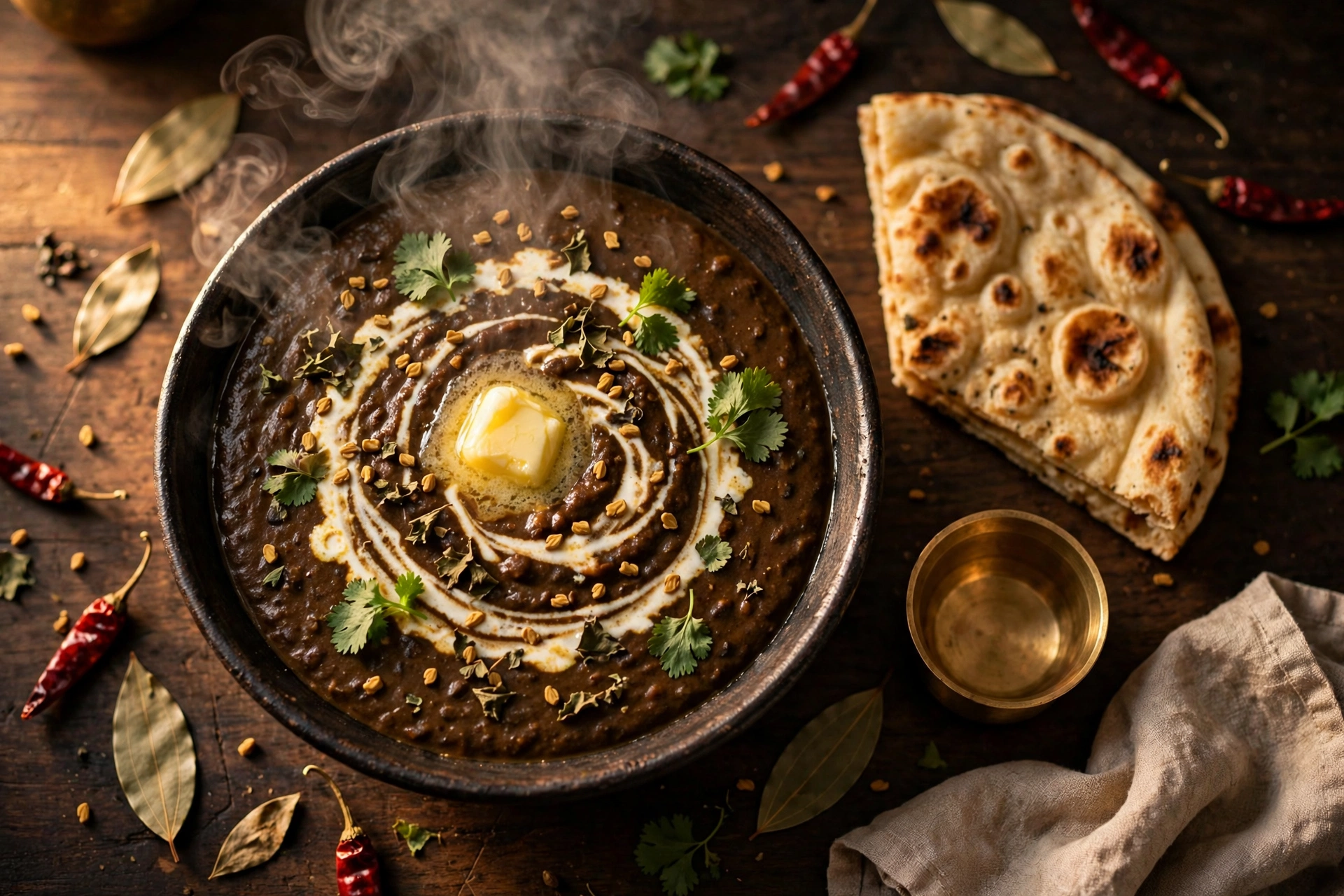
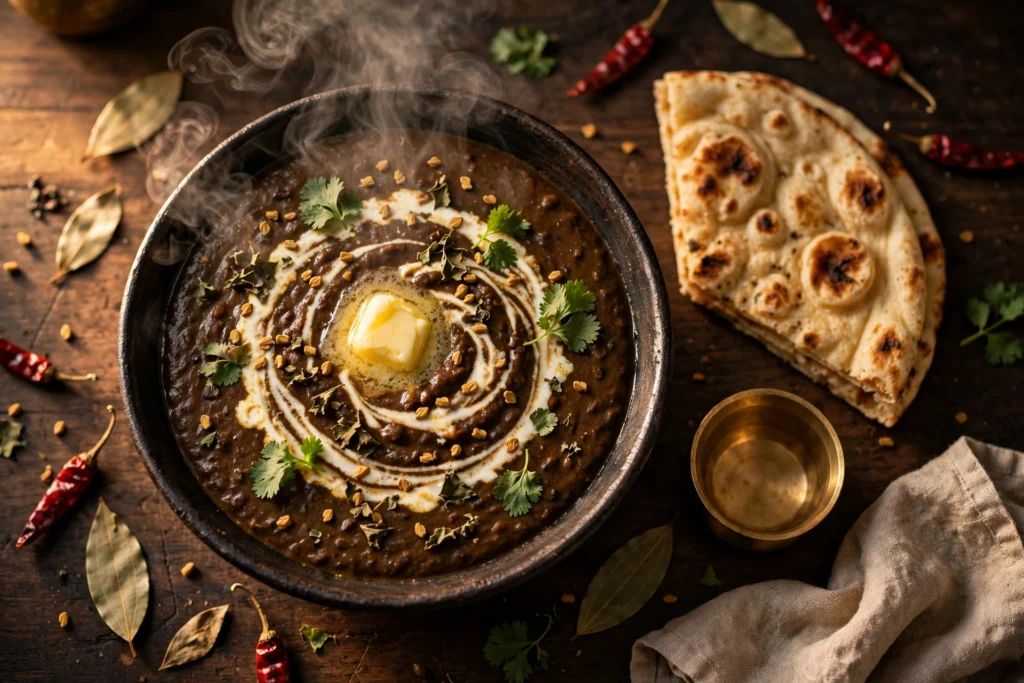
Ladle the hot dal makhani into a serving bowl or individual katoris. Drizzle the extra 2 tbsp of cream in a swirl over the top, add a small knob of butter in the center, and sprinkle with chopped fresh coriander. Serve immediately with tandoori naan, garlic naan, or hot steamed basmati rice. Aur saath mein kachumber salad — perfect dawat plate.
Pro Tips for Perfect Daal Makhani
- Use whole black urad, not split. Sabut urad is what gives dal makhani its dark color and rich body.
- Kashmiri chili for color, regular chili for heat. This split gives you the restaurant look without burning your mouth.
- Crush kasuri methi in your palms. Rubbing releases the oils and makes the aroma ten times stronger.
- Day-two dal is best. The flavors marry overnight; reheat gently with a splash of water and fresh cream.
Variations
Pressure Cooker Shortcut: Cook the soaked dal with all the masala base ingredients together for 25–30 minutes on low after the first whistle, then mash, add cream, and simmer 20 minutes. About 85% of the slow-cooked taste in half the time.
Vegan Dal Makhani: Replace butter with vegan butter or coconut oil, and swap the heavy cream for ½ cup thick coconut milk or cashew cream. It turns out surprisingly rich and creamy.
Rajma-Free Version: Some families skip the rajma and use only whole urad dal. Use 1¼ cups urad dal and cook as directed — the result is darker, smoother, and deeply traditional.
FAQs
Why is my dal makhani not creamy enough?
Almost always it is undercooked lentils or a rushed simmer. The urad dal must be completely melt-soft before you add anything else, and the combined pot needs at least 45 minutes of gentle simmering. The mashing step matters too — it releases the starch that thickens the dal.
What is the difference between dal makhani and dal fry?
Dal makhani uses whole black urad dal simmered for hours with butter and cream — thick, rich, and mild. Dal fry is usually made from quick-cooking dals (toor or masoor) and finished with a hot ghee tadka — thinner, brighter, and more everyday. Two completely different moods.
How do I store and reheat dal makhani?
It keeps in the fridge for 4–5 days and freezes well for up to 2 months. Reheat on low heat with a splash of water, then add a fresh drizzle of cream to bring back the silkiness.
Conclusion
Dal makhani is proof that the simplest ingredients — lentils, tomatoes, butter — can become something extraordinary with nothing but patience. It is the dish that turns an ordinary family dinner into a small celebration.
So soak your dal tonight, give it the slow simmer it deserves tomorrow, and serve it bubbling hot with naan. When the first spoonful goes around the table and everyone goes quiet for a second — bas, samajh jana, your dal makhani worked.