Sooji Kheer for Babies (6+ Months) – Gentle Desi First Food
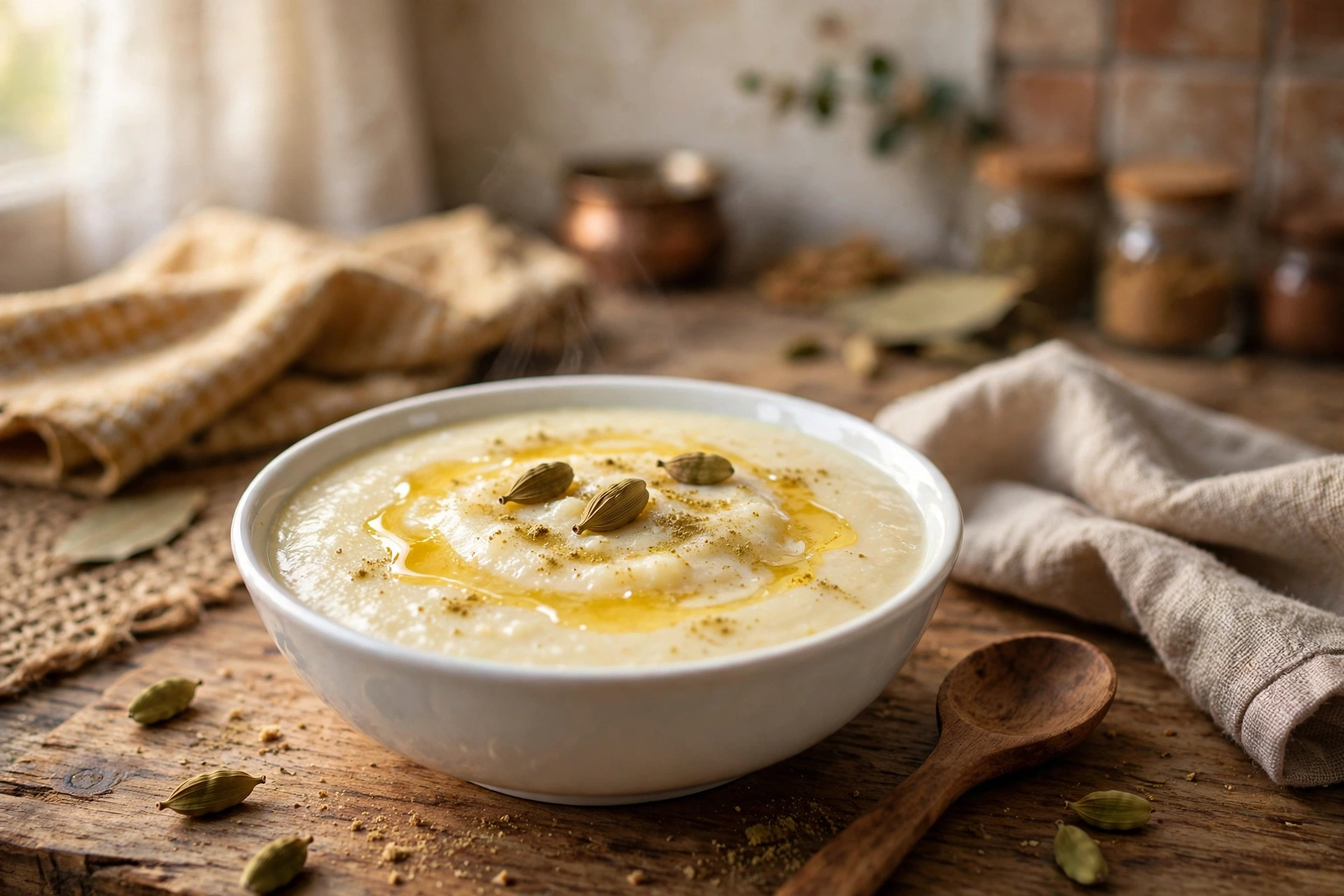
When my niece turned six months old, the whole family had opinions about her first solid food. My mother said khichdi, my aunt said mashed banana, and my dadi simply said, “Pehle meetha khilao” — start with something sweet. And that is how sooji kheer entered our home as the very first thing a baby tastes besides milk. A bowl of soft, warm semolina porridge, thin enough to slide off a spoon, sweet just from the milk, and familiar in a way no store-bought cereal can ever be.
Sooji kheer is one of the oldest desi first foods there is. It is ready in fifteen minutes, uses ingredients already in your kitchen — fine sooji, milk, a little ghee — and cooks into a smooth porridge with nothing to blend or strain. Gentle on a tiny tummy, familiar in taste, and simple enough for the most nervous first-time parent. This is our family’s recipe, written down with the little details that make it safe and perfect for babies.
Why Sooji Kheer Works as a First Food
Around six months, babies are ready to explore food beyond milk — the age most pediatricians point to for starting solids, though you should always follow your own pediatrician’s advice for your child. A first food should be soft, easy to swallow, and gentle to digest, and sooji kheer checks every box: semolina cooks into a silky porridge, the milk base is a taste babies already know, and a small spoon of ghee adds the energy little bodies need. And unlike packet cereal, you know exactly what is in the bowl — nothing you cannot pronounce.
Ingredients (Makes 4–5 Baby Servings)
- 4 tablespoons fine sooji (semolina) — about 40 g; use the fine variety, not the coarse moti sooji
- 2 cups whole milk (500 ml)
- 1 teaspoon desi ghee
- 1 tablespoon grated jaggery (gur), optional — only after the baby is comfortable with plain kheer
- A tiny pinch of elaichi (green cardamom) powder, optional — best from 7–8 months onwards
- Water as needed, to adjust consistency
A note on milk: Small amounts of cow’s milk in cooking are generally fine around six months, but milk should not replace breast milk or formula as the main drink until age one. If your pediatrician advises against cow’s milk for now, cook the kheer in water and stir in breast milk or formula off the heat.
How to Make Sooji Kheer for Babies (Step by Step)
Step 1 – Dry-roast the sooji
Put the sooji in a heavy-bottomed pan over low heat. Roast it dry, stirring constantly, for 3–4 minutes until it smells nutty and turns pale golden. Do not let it brown — browned sooji tastes bitter. Tip it into a bowl and set aside. Roasting first is the secret to lump-free kheer.
Step 2 – Warm the ghee and milk
In the same pan, warm the ghee over low heat and pour in the milk. Let it come to a gentle simmer — never a rolling boil, which scorches the milk.
Step 3 – Add the sooji slowly
Now sprinkle the roasted sooji into the hot milk a little at a time, whisking or stirring continuously with the other hand. Slow and steady is the whole trick; dump it in at once and you will get lumps no amount of stirring will fix.
Step 4 – Cook till silky
Let the kheer cook on low heat for 8–10 minutes, stirring often, until it coats the back of a spoon and flows slowly — like a thick soup, not a set pudding. If it looks too thick, splash in a little hot water or milk. Remember it will thicken further as it cools, so stop cooking when it is slightly thinner than you want it to be.
Step 5 – Sweeten gently (off the heat)
Take the pan off the heat. If you are adding jaggery, stir it in now — jaggery can split milk if boiled hard. For the very first servings, skip the sweetener entirely; milk has its own gentle sweetness and babies do not need extra sugar. Stir in the elaichi powder if using.
Step 6 – Cool and serve lukewarm
Let the kheer cool to lukewarm — test a drop on the inside of your wrist; it should feel warm, not hot. For the first week, keep it thin and runny so the baby can manage it easily. As the baby gets the hang of swallowing, you can serve it slightly thicker. Feed with a small soft spoon, in tiny amounts, and let the baby set the pace.
Pro Tips for the Perfect Baby Kheer
- Fine sooji only. Coarse sooji stays grainy however long you cook it. If you only have coarse sooji, grind it briefly in a dry mixer before roasting.
- No salt, no honey. No added salt for babies under one, and never honey before age one — the risk of infant botulism. No exceptions.
- One new food at a time. Introduce sooji kheer on its own and wait about three days before another new food, so you can spot the cause of any reaction.
- Sooji contains wheat gluten. Most babies handle it fine, but watch for discomfort, rash, or unusual fussiness in the first few days and mention any concerns to your pediatrician.
- Re-stir before serving. Kheer forms a skin as it sits — stir well and add a splash of warm milk if it has thickened too much.
- Keep portions small. Two to four tablespoons per serving is plenty for a six-month-old; milk is still the main food.
Variations As Your Baby Grows
Once plain sooji kheer is accepted happily, ring the changes slowly — one new addition at a time.
- Apple sooji kheer (7+ months): Grate half a peeled apple finely and stir it in during the last two minutes of cooking.
- Banana sooji kheer (7+ months): Mash half a ripe banana and fold it through the cooled kheer — naturally sweet, so skip the jaggery.
- Dry-fruit sooji kheer (8+ months): Add half a teaspoon of finely ground almond or cashew powder while cooking. Grind to an absolutely fine powder — no chunks — one nut type at a time.
- Sooji-ragi mix (8+ months): Replace one tablespoon of sooji with ragi (finger millet) flour for extra iron and calcium; cook a minute or two longer.
Storage and Reheating
Sooji kheer is at its best fresh, but leftovers keep in a covered container in the fridge for up to 24 hours. Reheat gently on the stove with a splash of milk or water, stirring well — never serve it cold, and do not reheat it more than once. If it has gone very thick in the fridge, thin it back down; the texture should always be easy for the baby to swallow.
FAQs About Sooji Kheer for Babies
Can I give sooji kheer to a 5-month-old?
Most pediatricians recommend starting solids around six months. Do not start before your pediatrician gives the green light — age is a guideline, not a race.
Can I use sugar instead of jaggery?
You can, in very small amounts, but for the first month of solids skip sweeteners altogether — the baby will not miss what it has never tasted, and less sugar early on is better.
Why no honey for babies under one?
Honey can carry the bacteria that cause infant botulism, which a baby’s gut cannot handle like an adult’s. This includes honey in cooked food — heat does not make it safe. Wait until after the first birthday.
Can I make it with breast milk or formula?
Yes. Cook the kheer in water, let it cool slightly, then stir in breast milk or formula off the heat. Never boil breast milk or formula — high heat destroys nutrients.
Is sooji kheer enough for breakfast every day?
It is a lovely breakfast, but babies thrive on variety. Rotate it with other gentle first foods — like baby’s first khichdi, mashed fruits, and soft vegetables.
My baby pushed the spoon away. What now?
Completely normal. Some babies need ten or more tries before accepting a new food. Stay relaxed, end the meal without fuss, and offer it again in a few days. Never force-feed.
The Sweet Start Every Desi Baby Deserves
There is something special about a baby’s first taste of sooji kheer — the curious stare, the surprised little face, and then, almost always, the mouth opening for more. It has crossed generations without changing because it simply works: gentle, quick, and made from the pantry. Start plain, keep it thin and lukewarm, let the baby explore at its own speed — and pair it with our baby’s first khichdi for the savoury side of the classic desi start to solids.