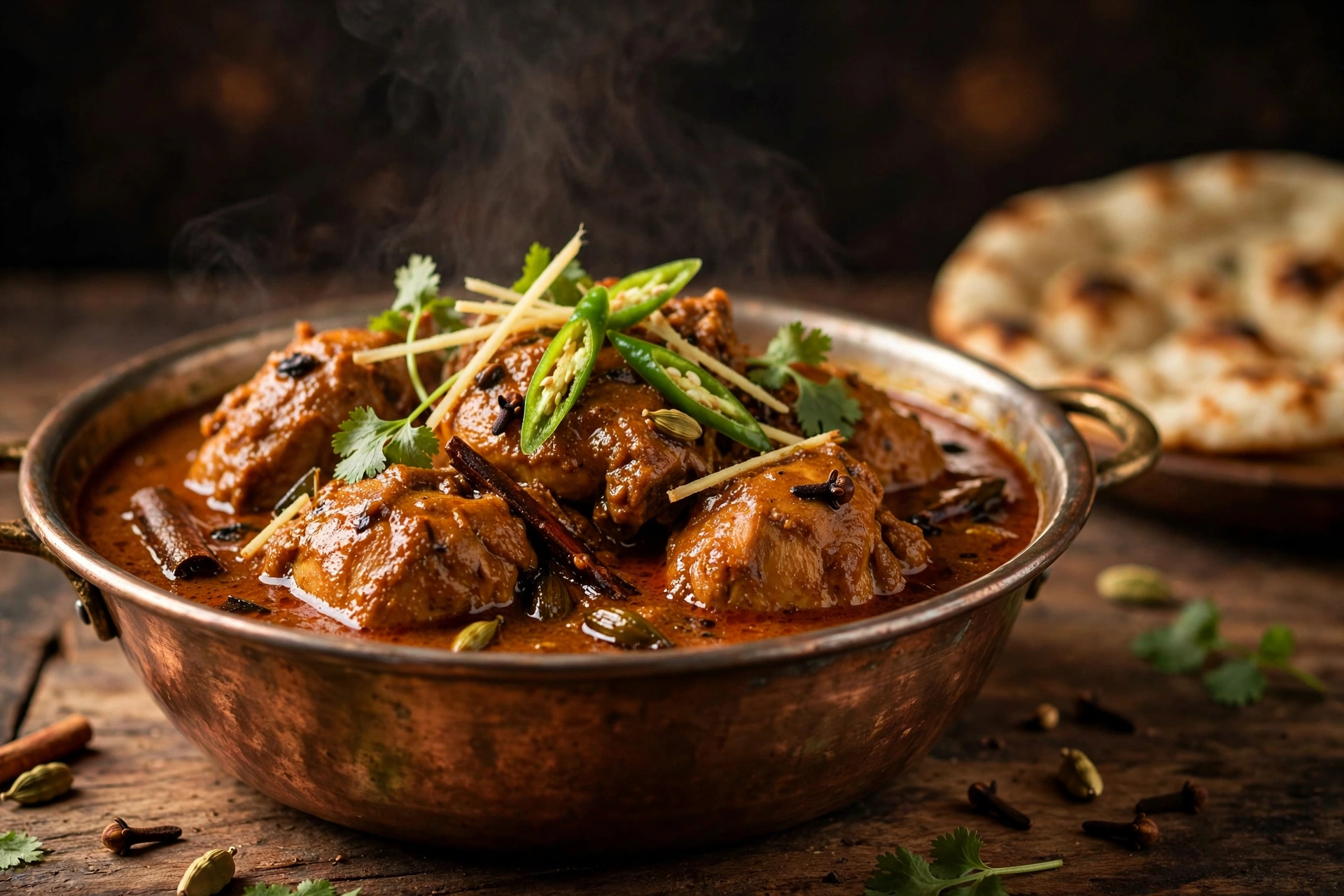
Chicken Qorma Recipe – Authentic Pakistani Slow-Cooked Chicken Curry
Every dawat has a star dish, and in most Pakistani homes, that dish is qorma. You know the one — chicken so tender it falls off the bone, wrapped in a deep, glossy gravy the color of sunset, with oil glistening at the edges the way it is supposed to. Serve it with hot naan or sheermal, and watch the whole table go quiet. Khamoshi hi tareef hoti hai.
Qorma is Mughlai royalty, from the kitchens of the Mughal emperors, where cooks understood something we are still catching up on: great curry is not about more spices, it is about patience. The magic happens in the bhunai — that slow frying of chicken, yogurt, and spices until the oil separates and the gravy turns silky. Rush it, and you get ordinary salan. Respect it, and you get the dish of dawats.
The good news? You do not need a royal kitchen. This recipe gives you the real, dawat-worthy result with honest measurements and every home-kitchen detail — including why your yogurt sometimes splits, and how to make sure it never does again.
Why You’ll Love This Chicken Qorma
- Authentic degi flavor – slow-bhunoed gravy, rich and aromatic, like a wedding-house qorma.
- Tender, juicy chicken – the slow simmer does the work; the meat practically slides off the bone.
- Dawat-ready – feeds a crowd, looks impressive, and reheats even better the next day.
- Real measurements – no “andaaza masale,” every spoon is written down.
- One-pot cooking – everything happens in a single deigchi or heavy pot.
Ingredients
Serves 5–6. For a bigger dawat, just double everything — qorma scales beautifully.
Main
- Chicken (bone-in, skin removed, cut into 12–14 pieces) – 1 kg
- Onions, finely sliced – 3 large (about 350 g)
- Cooking oil – 1 cup (200 ml); you can swap 3–4 tbsp of it for desi ghee for extra aroma
- Plain yogurt (dahi), at room temperature and well whisked – 1½ cups (350 g)
- Ginger-garlic paste – 2 tbsp (fresh is best)
- Salt – 1½ tsp (adjust to taste)
Powdered Spices
- Red chili powder – 1½ tsp (adjust for heat)
- Turmeric powder (haldi) – ½ tsp
- Coriander powder (dhania) – 1½ tbsp
- Cumin powder (zeera) – 1 tsp
- Garam masala – 1 tsp (added at the end)
Whole Spices
- Bay leaves (tez patta) – 2
- Green cardamom (sabz elaichi) – 5–6 pods
- Black cardamom (badi elaichi) – 2 pods
- Cinnamon sticks (dalchini), 2-inch pieces – 2
- Cloves (laung) – 6
- Black peppercorns (kali mirch) – 8–10
For Finishing
- Kewra water – 1 tsp (optional but very authentic)
- Fresh coriander leaves (dhania), chopped – 2 tbsp
- Fresh ginger, cut into thin juliennes – 1-inch piece
- Green chilies, slit – 3–4 (optional)
Step-by-Step Instructions
Step 1: Make the Birista (Golden Fried Onions)
Heat the oil in a heavy-bottomed deigchi over medium heat. Add the sliced onions and fry, stirring often, until deep golden brown — about 12–15 minutes. Pale onions give a bland gravy, burnt ones turn it bitter. Golden brown, like strong chai, is the sweet spot. Lift them out with a slotted spoon and spread on a plate to cool. Keep the flavored oil in the pot.
Step 2: Temper the Whole Spices
In the same oil over medium heat, add the bay leaves, cardamoms, cinnamon, cloves, and peppercorns. Let them sizzle for 30–40 seconds until fragrant. You will smell that unmistakable shahi aroma rising — the foundation of the whole dish.
Step 3: Bhunno the Chicken
Add the chicken to the pot and fry over medium-high heat for 8–10 minutes, turning the pieces for a light golden color on all sides. Add the ginger-garlic paste and bhunno 2–3 more minutes until the raw smell disappears. This initial frying seals in the juices — color equals flavor.
Step 4: Add the Powdered Spices
Lower the heat to medium-low. Add the salt, red chili powder, turmeric, coriander powder, and cumin powder. Stir and fry for 2–3 minutes, splashing in 2–3 tbsp of water if anything threatens to stick. The spices should darken slightly and smell roasted, not raw. This is the second layer of the bhunai — the moment qorma stops being chicken curry and starts becoming qorma.
Step 5: Add the Yogurt (The Crucial Step)
Here is where qorma is won or lost. Turn the heat to LOW. Add the whisked yogurt one spoonful at a time, stirring continuously. Never dump cold yogurt into a hot pot — it will split, and split yogurt never fully comes back. Room-temperature yogurt, low flame, slow stirring: keep it up for 10–12 minutes until the oil begins to separate around the edges. Jab tail nikal aaye, samajh lo kaam ho gaya.
Step 6: Crush the Onions and Simmer
Crush the cooled fried onions between your palms — coarse crumbs, not powder — and stir them into the pot. They melt into the gravy and give it that thick, slightly sweet body. Pour in 1½ to 2 cups of hot water (never cold — it shocks the gravy), stir, cover, and simmer on the lowest flame for 20–25 minutes, until the chicken is fork-tender and the gravy clings richly.
Step 7: The Final Dum
Sprinkle in the garam masala and the kewra water, give one gentle stir, and cover the pot for a 5-minute dum on the lowest possible heat. This last steam bath marries all the flavors together. Turn off the flame, garnish with fresh coriander, ginger juliennes, and slit green chilies, and rest it for 10 minutes before serving. Qorma served straight off the flame is good; qorma that has rested is magnificent.
Pro Tips for Perfect Qorma
- Room-temperature yogurt, always. Take it out of the fridge 30–45 minutes before cooking. Cold yogurt + hot pot = split gravy, guaranteed.
- Low flame for the yogurt step. This is the single most important line in this recipe. Every curdled-qorma story starts with “the flame was a bit high.”
- Watch the onions like a hawk. The jump from golden to burnt is about 60 seconds. Keep them moving and pull them off a shade before you think they’re done — they keep darkening on the plate.
- Hot water only, mid-cook. Cold water seizes the chicken and splits a delicate gravy. Keep a kettle warm nearby.
- It tastes better tomorrow. Qorma is one of those rare dishes that genuinely improves overnight in the fridge. For a dawat, make it a day ahead — less stress, more flavor.
Variations to Try
- Mutton Qorma – swap the chicken for 1 kg mutton (bone-in); increase the simmer in Step 6 to 45–55 minutes until the meat is tender. Everything else stays the same.
- Chicken White Qorma (Safed Qorma) – skip the red chili powder and turmeric; double the black pepper and add ¼ cup of ground cashew or melon-seed (maghaz) paste with the yogurt. Creamy, mild, and elegant.
- Shahi Qorma – add 3 tbsp each of ground almonds and cashews along with the crushed onions, and finish with 2 tbsp of fresh cream. Fit for actual royalty.
FAQs
Why did my yogurt split in the qorma?
Nine times out of ten: the flame was too high, or the yogurt was cold, or it was added all at once. Fix it next time with low heat, room-temperature yogurt, and slow stirring.
How thick should qorma gravy be?
Thick enough to coat the chicken and cling to naan — not soupy, not dry. It should slowly slide off a spoon, leaving a velvety trail. Remember it thickens more as it cools and rests.
Can I use boneless chicken?
You can, but bone-in is better. Bones release flavor and gelatin into the gravy during the slow simmer, and that is a big part of qorma’s richness. If you must use boneless, cut the simmer to 12–15 minutes so the chicken doesn’t dry out.
Can I make qorma ahead of time?
Absolutely — in fact, you should. It keeps 3–4 days in the fridge and the flavor deepens overnight. Reheat gently on low flame with a splash of hot water; never microwave it on high or the oil separates badly.
Can I freeze chicken qorma?
Yes, for up to 2 months in an airtight container. Thaw overnight in the fridge and reheat slowly; a gentle stir over low heat brings the gravy back together.
What is the difference between qorma and karahi?
Karahi is fast, tomato-forward, and cooked on high heat. Qorma is slow, yogurt-and-onion based, with whole spices and a creamy bhunoed gravy. Same chicken, completely different soul.
Conclusion
Chicken qorma is not difficult — it is deliberate. Fry the onions golden, bhunno the chicken with patience, treat the yogurt with respect, and let the dum do its quiet work. What comes out of that pot turns an ordinary Friday into a dawat.
Make it this weekend. Serve it with hot naan or zeera rice, and then tell me — kya ye dawat-wali qorma nahi bani?