Sugar-Free Kheer Recipe – Diabetic-Friendly Rice Pudding
Last Eid, my mother put her foot down. “Meetha band,” she announced — the doctor’s orders after her sugar levels crept up. And honestly, the whole house felt the loss. Eid without kheer? Kheer is not just a dessert in our homes; it is the bowl that shows up at every dawat, every shab-e-barat, every time a rishta gets fixed. A celebration without that slow-simmered, cardamom-scented rice pudding feels incomplete, like a sentence missing its last word.
So I did what any stubborn cook would do: I spent three weekends making batch after batch of kheer with no refined sugar — testing erythritol, stevia blends, different rice grinds, different simmer times — until the family blind taste test came back with the verdict I wanted. “Ye to wahi wali kheer hai,” my mother said. Same beloved creamy taste, zero refined sugar. This recipe is the result, with real measurements and every honest detail, including the ones most “sugar-free” recipes skip.
One honest note before we start: “sugar-free” here means no refined or added sugar. Milk still contains natural lactose and rice is a carbohydrate, so this is not a zero-carb dessert — it is a genuinely lower-sugar option. If you manage diabetes, enjoy it in sensible portions and check with your doctor. This is a recipe, not medical advice.
Why This Sugar-Free Kheer Actually Works
- Same slow-simmered creaminess – we build body from the milk and rice themselves, not from sugar, so the texture is the real deal.
- No weird aftertaste – the sweetener is measured properly and added off the heat, which is where most sugar-free desserts go wrong.
- Cardamom and nuts do the heavy lifting – when sugar is out of the picture, aroma and texture carry the dessert, and kheer has both in abundance.
- Works warm or chilled – serve it fresh off the stove or after a few hours in the fridge; it thickens beautifully either way.
- Family-approved – the kids in my house ate it without noticing anything different, which is the highest praise a sugar-free dessert can get.
Ingredients
Makes 6 servings (about ¾ cup per bowl). Mise en place matters: kheer needs your attention at the stove, so measure everything before the milk goes on.
- Full-cream whole milk – 1 litre (4¼ cups). Do not use skimmed or low-fat; the fat is what makes kheer creamy.
- Basmati or long-grain rice – ¼ cup (50 g), soaked in water for 30 minutes, then drained
- Granular erythritol – 1 cup (about 195 g) OR stevia baking blend – ⅓ cup + 1 tbsp OR pure stevia extract powder – 1 to 1¼ tsp (see the sweetener guide below before choosing)
- Green cardamom pods (elaichi) – 4–5, lightly crushed, or ½ tsp ground cardamom
- Fine salt – a small pinch (about ⅛ tsp); it quietly lifts all the flavors
- Unsweetened milk powder – 2 tbsp (optional, but it adds lovely body without any added sugar)
- Almonds (badam) – 2 tbsp, slivered or chopped
- Pistachios (pista) – 2 tbsp, chopped, plus 1 extra tbsp for garnish
- Rose water or kewra water – 1 tsp (optional)
- Saffron strands (kesar) – a small pinch (optional, for color and aroma)
A Quick Word on Sweeteners (Read Before You Start)
The sweetener you choose decides whether this tastes like kheer or like a science experiment, so let’s get it right. Granular erythritol is my first choice: it measures almost like sugar, dissolves cleanly into hot milk, and has no aftertaste for most people. Because it is about 70% as sweet as sugar, we use a full cup here — roughly 1.25 times the sugar a regular kheer would take.
Stevia baking blends (the kind mixed with erythritol, sold for baking) work well too — use about half the volume of sugar, hence ⅓ cup plus a tablespoon. Pure stevia extract powder is extremely concentrated: start with 1 teaspoon, taste, and add a quarter teaspoon more only if needed. Whatever you choose, add it at the end, off the heat — stevia in particular can turn bitter if it boils hard, and all sweeteners are easier to adjust when you can actually taste the finished kheer.
One more honest point: erythritol can sometimes feel slightly “cool” on the tongue, like a minty freshness. In a rich, cardamom-heavy kheer you will barely notice it — but if you are sensitive to it, the stevia baking blend is the smoother option.
Step-by-Step Instructions
Step 1: Soak and Prep the Rice (30 Minutes, Hands-Off)
Rinse the ¼ cup rice under cold water until the water runs mostly clear, then soak it in fresh water for 30 minutes and drain. Here is the first texture secret: pulse the drained rice in a dry grinder just 2–3 times so the grains break into coarse bits — not powder, not flour. Broken rice releases its starch faster, and starch is what thickens kheer when there is no sugar doing part of the job.
Step 2: Start the Milk
Pour the full litre of milk into a heavy-bottomed pan or deigchi — heavy base is non-negotiable, because scorched milk ruins everything. Bring it to a gentle boil over medium heat, stirring now and then. The moment it starts rising, lower the flame. A rolling boil makes kheer foamy and uneven; we want a lazy, steady simmer.
Step 3: Add the Rice and Begin the Slow Simmer (25–30 Minutes)
Stir in the drained, coarsely-broken rice. Keep the flame at low-medium — the surface should barely tremble. Now settle in: simmer for 25–30 minutes, stirring every few minutes and scraping the bottom and sides each time. You will see a skin of malai forming on top and the milk clinging to the pan’s sides. Scrape all of that back into the pot every time — that skin is concentrated creaminess, and in a sugar-free kheer it is precious.
Step 4: Cardamom, Salt, and Milk Powder
When the milk has reduced by about a third and the rice grains are swelling and soft, stir in the crushed cardamom pods, the pinch of salt, and the optional 2 tablespoons of milk powder. The milk powder dissolves into the hot milk and adds body — it contains natural milk sugar (lactose) but no refined sugar, so our “sugar-free” claim stays honest. Keep simmering and stirring.
Step 5: The Low, Slow Finish (10–15 More Minutes)
This is where patience pays. Continue simmering on low, stirring more frequently now, until the kheer coats the back of a spoon — dip a spoon in, run your finger through the coating, and the line should hold clean. The rice grains should be completely soft but still distinct, never mushy. Total cooking time lands around 40–45 minutes. Do not rush this step: thin, hurried kheer is the number one complaint, sugar or no sugar.
Step 6: Sweeten Off the Heat (Taste as You Go)
Take the pan off the flame and wait 2 minutes — the bubbling should stop. Now add your chosen sweetener gradually: if using erythritol, sprinkle in the cup a little at a time, stirring until fully dissolved; if using stevia extract, start with 1 teaspoon. Taste carefully (it is hot). Aim for a touch sweeter than you think you want — cold dulls sweetness, and this kheer gets even better chilled.
Step 7: Nuts and Aroma
Fold in the almonds and the 2 tablespoons of pistachios. If using saffron, first bloom the pinch in a tablespoon of warm milk for 5 minutes, then stir that golden liquid in — it perfumes the whole pot. Add the teaspoon of rose water or kewra water last, off the heat, so its fragrance does not cook away. Give everything one final gentle stir.
Step 8: Serve Warm or Chill (3–4 Hours for Best Texture)
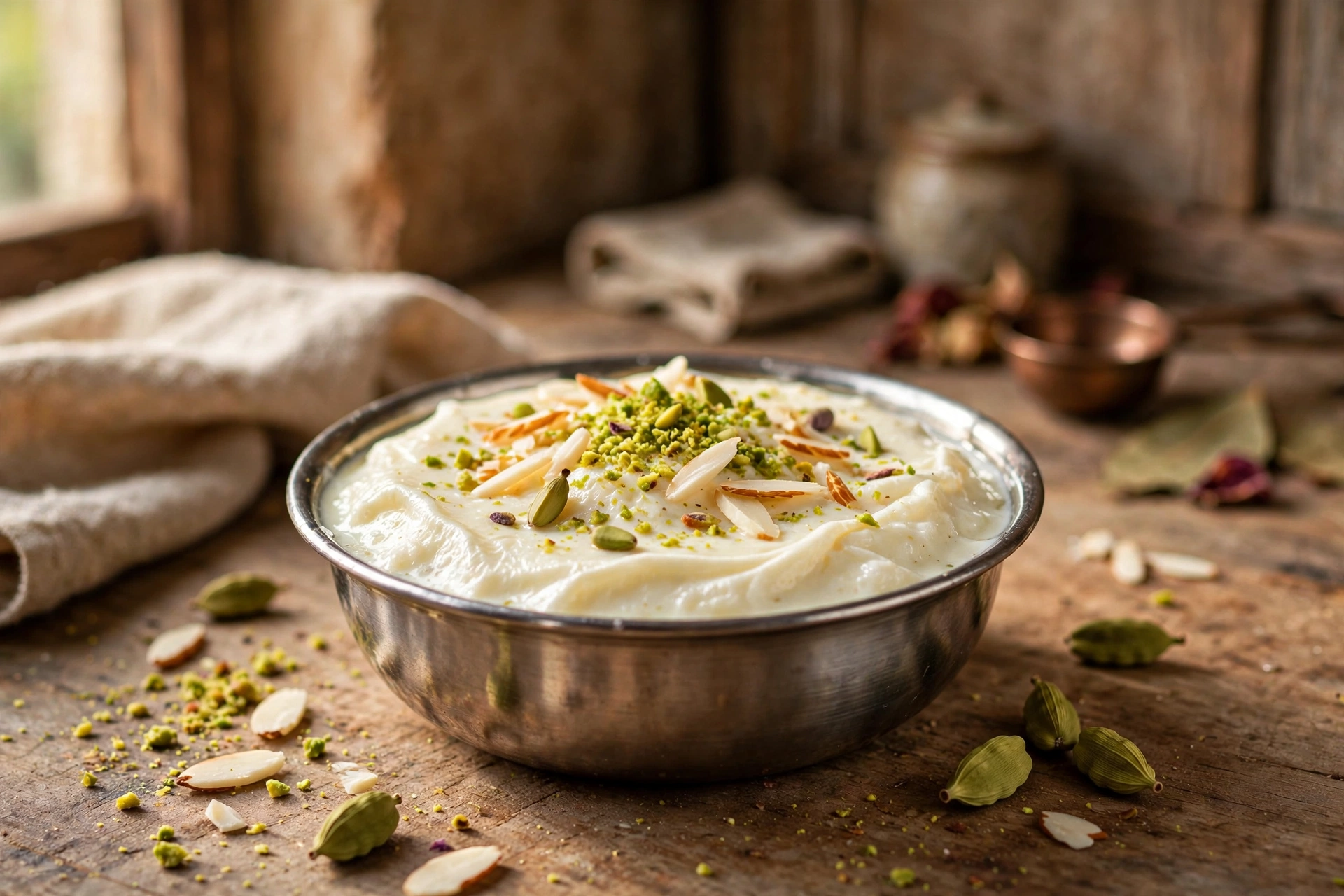
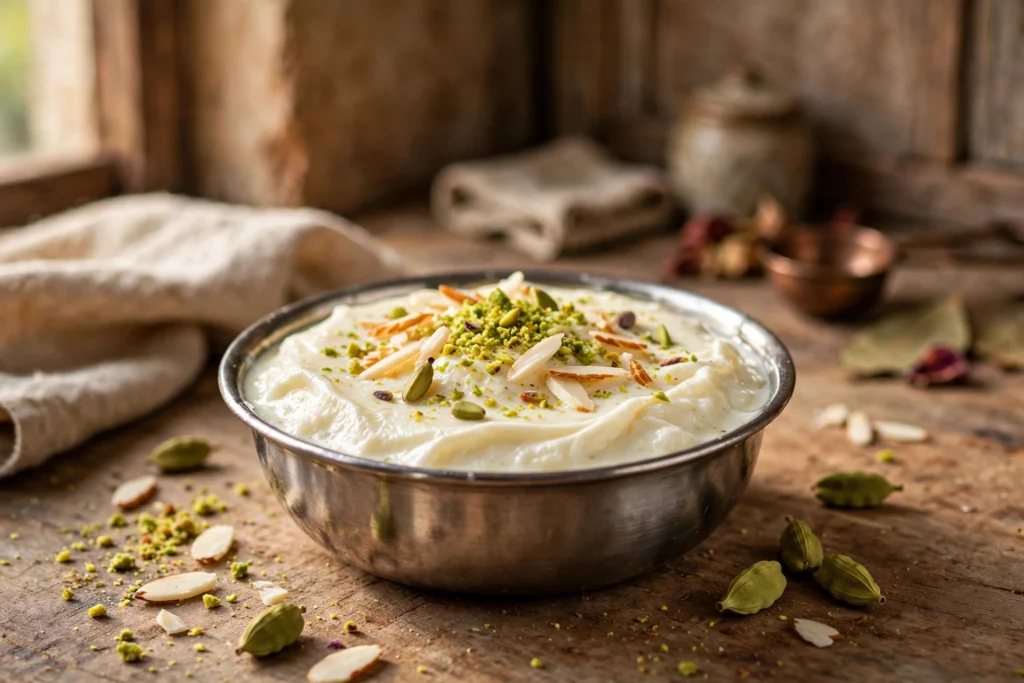
Transfer the kheer to a serving bowl — it will continue to thicken as it cools, so do not worry if it looks slightly loose right now. For the classic experience, cover and refrigerate for 3–4 hours. A delicate malai skin will form on top; that is the best part, not a flaw. Garnish with the reserved tablespoon of pistachios just before serving. Warm or cold, mehmaan ho ya ghar wale — nobody will believe there is no sugar in it.
Pro Tips for Creamy Texture Without Sugar
- Sugar adds body, so replace that body deliberately. In regular kheer, dissolved sugar thickens the milk. Here, the long simmer, the broken rice starch, and the optional milk powder do that job — skip any one of them and the kheer will feel thin.
- Never walk away during the last 15 minutes. As the milk reduces, it catches faster. The constant stirring is not fussiness; it is the difference between silky and scorched.
- Full-cream milk only. Skimmed milk makes a watery kheer that no amount of stirring can fix. The fat carries the cardamom flavor too.
- Sweeten in stages, off the heat. You can always add more sweetener; you cannot take it back. And boiling stevia hard is how the bitter aftertaste happens.
- Chill time is an ingredient. Kheer thickens noticeably in the fridge as the starches set. If serving warm, simmer it 5 minutes longer than you think necessary.
- Thin leftovers with milk, not water. Day-two kheer gets very thick — a splash of cold milk stirred in brings it right back.
Variations
Mango sugar-free kheer: fold in ½ cup unsweetened mango pulp at Step 7. Honest note: mango adds natural fruit sugar, so it is no longer strictly sugar-free — but still far lower in sugar than the regular version, and the flavor is outstanding.
Coconut kheer: replace 1 cup of the milk with canned coconut milk. It adds richness and a gentle coconut aroma that pairs beautifully with cardamom.
Chocolate kheer: whisk 2 tablespoons of unsweetened cocoa powder into the milk powder at Step 4. The kids’ favorite — tastes like a Mughlai chocolate pudding.
Badam kheer: double the almonds and grind half of them into a coarse paste with a little milk; stir the paste in at Step 4 for an intensely nutty, royal-style kheer.
Nutrition Info (Honest Numbers)
Per serving (about ¾ cup; recipe makes 6): approximately 150–170 kcal, 6 g protein, 5 g fat, and 20–22 g carbohydrates — almost all of that from the milk’s natural lactose and the rice. Compare that with a regular kheer at roughly 280–300 kcal and 35–40 g sugar per serving, and the difference is real.
But let me say it plainly one more time: “sugar-free” means no refined or added sugar. It does not mean carb-free or calorie-free, and these numbers are estimates from standard ingredient values, not lab-tested figures. Portion size matters — a small bowl satisfies completely, because this kheer is rich.
FAQs
Is sugar-free kheer really diabetic-friendly?
It is a genuinely lower-sugar option: no added sugar, fewer calories, and fewer total carbs than regular kheer. But milk and rice still contain natural sugars and starches that affect blood glucose, so think of it as an occasional treat in a sensible portion — not a health food, and not a substitute for medical advice. When in doubt, check with your doctor.
Can I use honey or jaggery (gur) instead?
You can, but then it is not sugar-free anymore. Honey and jaggery are natural, but your body treats them much like regular sugar — they raise blood sugar similarly. If your goal is genuinely lower sugar, stick with erythritol or stevia.
Why does my kheer taste less sweet after chilling?
Cold temperatures dull our perception of sweetness — this happens with sugar too, not just sweeteners. That is why Step 6 says to aim slightly sweeter than you think when tasting warm. Next time, add an extra tablespoon of erythritol (or a tiny bit more stevia) before chilling.
Can I make it ahead of time?
Absolutely — kheer is one of the best make-ahead Pakistani desserts. It keeps 3 days in the fridge in a covered container. Stir well before serving and loosen with a splash of cold milk if it thickened too much.
My kheer turned out thin. What went wrong?
Almost always, the simmer was rushed. The milk needs the full 40–45 minutes to reduce and the rice needs time to release its starch. If you are in a hurry, a rescue option: stir 1 tablespoon of cornstarch mixed into 2 tablespoons of cold milk into the simmering kheer and cook 3–4 more minutes. It adds a small amount of carbs, but it saves the batch.
Can I use condensed milk to make it richer?
Regular condensed milk is loaded with sugar, so no. There are sugar-free condensed milk versions in some stores — if you find one you trust, you can replace ½ cup of the milk with it and reduce the erythritol slightly. Taste as you go.
Conclusion
Meetha does not have to leave the table just because refined sugar did. This sugar-free kheer keeps everything we love about the original — the slow-simmered creaminess, the cardamom perfume, the crunch of pistachios, that proud malai skin on top — and simply leaves the sugar out. My mother’s Eid table had its kheer back this year, and honestly, nobody asked for the old version.
Make it this weekend. Serve it chilled in small bowls, watch people’s faces when you tell them there is no sugar in it, and keep the recipe handy — dawats have a way of demanding encores. Allah hafiz, aur meetha khayein, fikar ke baghair.